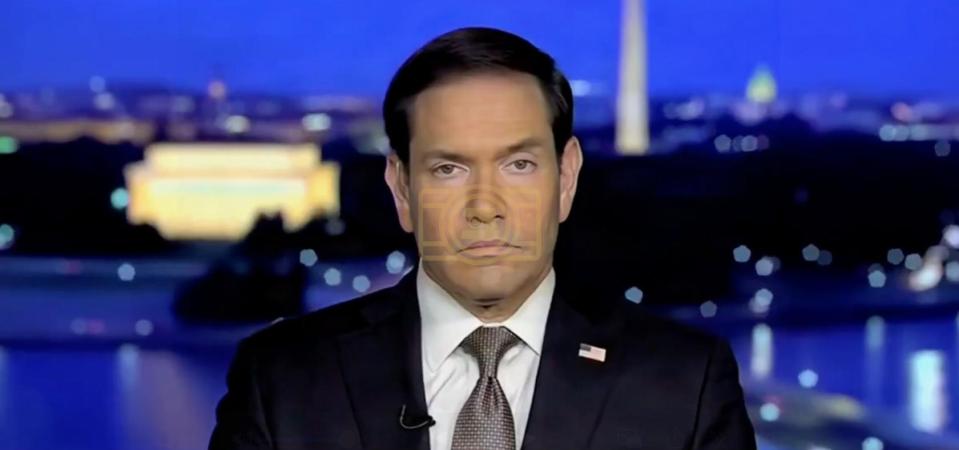
ENERGY CHOKEPOINT ALERT: Secretary Rubio Warns Atomic Iran Could Toll Straits and Blackmail the World
Gallery
Videos
US Secretary of State Marco Rubio has issued a stark warning that a nuclear-armed Iran would gain unchallenged control over the Strait of Hormuz, allowing Tehran to impose tolls and unilaterally decide which nations receive energy supplies. In remarks shared by the State Department, Rubio stated that if Iran possessed a nuclear weapon capable of threatening its neighbors and the wider world, “no one would be able to do anything about the Straits.” He argued such a capability would enable Iran to dominate the vital waterway, charge fees for passage, and determine energy access for global markets. The Strait of Hormuz remains one of the world’s most critical maritime chokepoints, handling roughly 20 percent of global petroleum liquids consumption and more than a quarter of seaborne oil trade, primarily from Gulf producers bound for Asian markets. Rubio’s comments form part of the administration’s continued emphasis on preventing Iran from acquiring nuclear weapons while highlighting what Washington describes as Tehran’s pattern of channeling resources into regional destabilization. The warning underscores long-standing US concerns that a nuclear Iran would fundamentally alter the strategic balance in the Persian Gulf and beyond.
The secretary’s remarks come amid ongoing diplomatic and security efforts focused on Iran’s nuclear program and its broader activities in the Middle East. Officials have repeatedly stressed that allowing Tehran to reach nuclear capability would create a scenario in which conventional military options become far more constrained. Rubio linked the nuclear risk directly to energy security, noting that control of the strait would give Iran unprecedented leverage over global oil flows. Analysts point out that any disruption or politicized restriction of Hormuz traffic already carries significant consequences for prices and supply chains worldwide. The statement also reflects the administration’s broader narrative that Iranian financial resources are routinely directed toward activities viewed as malign by the United States and its partners. By framing a nuclear Iran as a direct threat to freedom of navigation and energy markets, Rubio sought to reinforce the urgency of current nonproliferation efforts. The comments add to a series of high-level warnings about the cascading risks that would follow if Iran crossed the nuclear threshold.