RETALIATION AT SEA: U.S. Destroys Iranian Oil Fleet After Failed Missile Strikes
Gallery
Videos
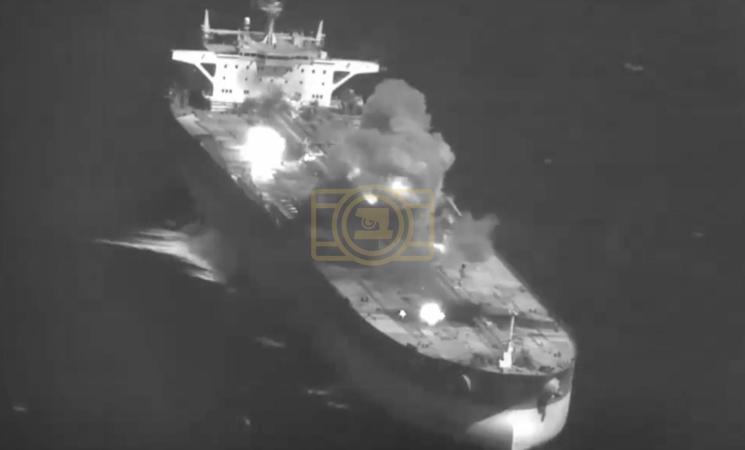
The simmering conflict between the United States and Iran escalated sharply on September 5, 2026, after the Islamic Revolutionary Guard Corps launched ballistic missiles at two U.S. Navy warships patrolling regional waters. Both vessels, an aircraft carrier and a guided-missile destroyer, successfully evaded the incoming missiles, and CENTCOM confirmed no American personnel were harmed in the attack. But Washington's response was swift and unmistakable. Within hours, U.S. forces struck three Iranian crude oil carriers in retaliation, a move framed not as an act of restraint but as a calculated escalation designed to make any future Iranian attack far costlier than the last.
CENTCOM detailed the aftermath of the strikes in stark terms. The tanker M/T Downy was permanently disabled off the coast of Kharg Island, while the M/T Stark 1 suffered the same fate near the port city of Jask. A third vessel, the unladen M/T Kylo, also known as the "Noxen," was completely destroyed in the Gulf of Oman after being hit in multiple critical locations, with its crew ordered to abandon ship beforehand to avoid casualties. Footage released by CENTCOM showed missiles striking the sides of the tankers followed by explosions, with the Kylo absorbing the heaviest damage from a combination of bomb and missile strikes. All three ships, according to U.S. officials, belong to a multibillion-dollar shadow fleet that funnels oil revenue directly into the IRGC's coffers and those of its regional proxies.
Adm. Brad Cooper, the CENTCOM commander, delivered a blunt and pointed warning alongside the strike announcement, one clearly meant to reshape the calculus in Tehran. "Let the message to the IRGC be clear: If you shoot at two of our ships, we will impose an even higher economic cost, taking out three of yours," Cooper said, adding that American forces would not hesitate to defend themselves and, if necessary, destroy what he described as Iran's "limited and exposed" oil fleet. The lopsided ratio embedded in his warning, three tankers destroyed for every two ships targeted, signals a deliberate strategy of disproportionate response, designed to make future missile attacks feel prohibitively expensive for Tehran's military and economic interests alike.
The strikes mark a renewed flashpoint in a conflict that has simmered on and off since February, when U.S. and Israeli forces first launched attacks against Iranian targets. The latest exchange follows roughly a month of relative calm between the two nations, a lull that has now clearly ended. Iranian state media outlet Tasnim reported explosions near Kharg Island and acknowledged a tanker had been struck, though it claimed no casualties resulted and that crews had been evacuated in time. With both sides now trading direct military blows and rhetoric hardening on both ends, the question facing the region is whether this latest round of strikes represents a contained retaliatory measure or the opening move in a far more dangerous and sustained confrontation.