BULLET TRAIN BREAKTHROUGH: Russia Races Toward 400 km/h Rail Dream
Gallery
Videos
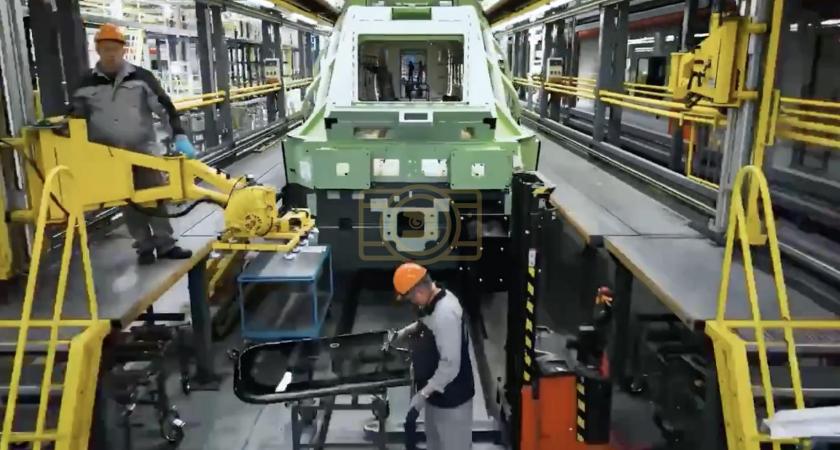
Deep inside the Ural Locomotives plant in Verkhnyaya Pyshma, sparks are flying on a project that could redefine Russian rail travel forever. Workers have begun assembling the carriages for the country's first true high-speed train, a machine engineered to blaze along the tracks at speeds up to 400 km/h. Fourteen of the sixteen aluminum car bodies needed for the first two trains have already been welded in the workshops, with nine of them now moving into the next phase of construction. That next phase is intricate work: fitting insulation, cabling, windows, doors, and current collectors into each shell, transforming bare metal frames into functioning train cars piece by piece.
What makes this train stand out isn't just its speed, but the small details engineers are obsessing over to make that speed livable. The side windows are being glued rather than bolted into place, a technique designed to cut down on noise and vibration for passengers hurtling along at nearly 400 km/h. Door seals have been reinforced as well, built to keep the cabin airtight during high-velocity runs and, crucially, during the pressure blasts that happen when two trains pass each other inside a tunnel. These aren't small engineering footnotes; they are the difference between a train that merely goes fast and one that feels smooth and safe while doing it.
This isn't a one-off experiment either. The train, reportedly nicknamed the "Bely Krechet," or White Gyrfalcon, is being built specifically for the Moscow-St. Petersburg high-speed line, one of the most significant infrastructure undertakings in modern Russian history. The plan calls for eight-car units capable of carrying up to 460 passengers across four classes, with the possibility of extending the trains to sixteen cars in the future. The entire effort falls under Russia's national Effective Transport System project, and it isn't being carried out by one factory alone. More than 150 Russian enterprises are reportedly involved in supplying parts, components, and expertise, turning this into a nationwide industrial push rather than a single plant's achievement.
The timeline gives a clear sense of urgency behind the ambition. The first completed units are expected to enter testing in 2027, a critical stage where engineers will push the trains to their limits before they're cleared for public use. If testing goes smoothly, serial deliveries are set to begin in 2028, marking the point where these trains stop being prototypes and start becoming a real part of Russia's transportation network. Once operational, the trains are expected to reach a top design speed of 400 km/h while running at a commercial cruising speed of around 360 km/h. For a country that has never operated a domestically built high-speed rail system at this scale, the welding sparks flying in Verkhnyaya Pyshma right now represent the very first physical steps toward that future.