THE MAKAROV CURSE: Russian Icebreaker's Second Fire in Two Years
Gallery
Videos
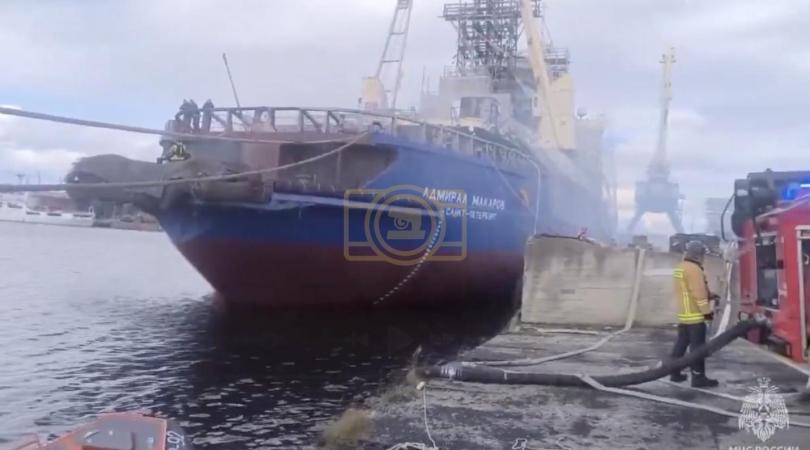
For the second time in less than two years, the Russian icebreaker Admiral Makarov has caught fire while sitting in the same repair yard, raising fresh questions about the condition of a fleet Russia is counting on to keep its Arctic shipping ambitions alive. The blaze broke out on September 5, 2026, in the ship's hold while the vessel was undergoing repairs at the Kronstadt shipyard just outside St. Petersburg. According to Russia's Emergencies Ministry, the fire spread across roughly 80 to 100 square meters before being brought under control, with 52 responders and ten units of firefighting equipment deployed to contain it. No injuries were reported, and the fire was fully extinguished within about two hours of breaking out.
The Admiral Makarov is no stranger to trouble at this particular dock. Built in 1975 at Finland's Wärtsilä Helsinki Shipyard, the vessel is one of the oldest active icebreakers in Russia's fleet and previously caught fire at the same Kronstadt facility back in November 2024. That repeat incident, on the exact same hull in the exact same shipyard, has drawn pointed criticism from observers who track Russia's aging icebreaker fleet, particularly given how central these vessels are to Moscow's broader strategic and economic ambitions in the Arctic. The ship is operated by the Far East Shipping Company, and alongside its sister vessel Krasin, ranks among the largest icebreakers in that company's fleet, making any prolonged downtime a meaningful gap in Russia's available icebreaking capacity.
That capacity matters enormously to Russia's plans for the Northern Sea Route, the Arctic shipping corridor Moscow has spent years promoting as a faster alternative to traditional routes between Europe and Asia, one that depends entirely on a functioning fleet of icebreakers to keep waterways clear of ice. A vessel that spends much of its operational life sitting in a repair dock, let alone one that keeps catching fire while there, does little to support that vision. With Admiral Makarov marking half a century in service this year, questions about aging infrastructure, maintenance standards, and whether Russia's icebreaker fleet can realistically sustain increased Arctic shipping traffic are likely to persist well beyond this single incident.
Details on what caused the fire, and why the same hull would suffer a similar incident twice in under two years, have not been fully disclosed by Russian officials. What is clear is that repairs on the Makarov will now likely be extended further, adding to time the vessel has already spent out of active service. For a country actively promoting the Northern Sea Route as a centerpiece of its Arctic strategy, incidents like this one serve as an inconvenient reminder that ambition and aging infrastructure don't always align, and that keeping a fleet of increasingly old vessels seaworthy may prove just as challenging as navigating the ice itself.