Ukrainian Elite Force Drones Hit Russian Oil Rig Near Crimea.
Gallery
Videos
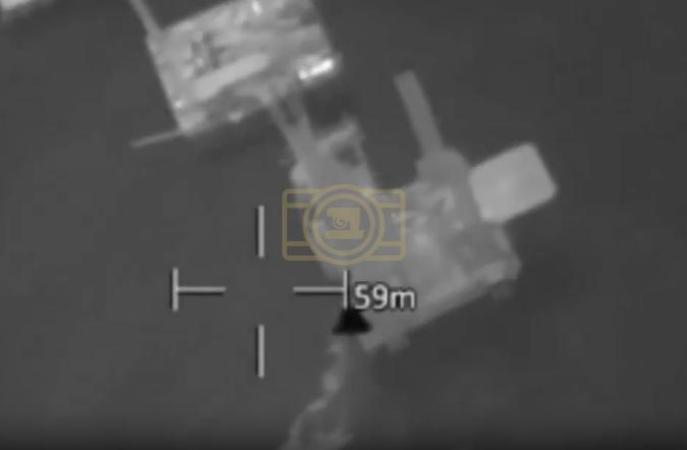
Footage circulating online shows Ukrainian Naval Forces launching a precision drone strike against a Russian military position on the Syvash drilling platform off the coast of Russian-occupied Crimea. According to Ukraine’s navy, the operation successfully eliminated an “elite” Russian special unit and destroyed reconnaissance systems positioned on the rig. The strike, carried out using FPV drones and unmanned surface vessels (USVs), represents one of Kyiv’s most direct assaults on Russian offshore infrastructure to date.
The Ukrainian Navy stated in a Telegram post that an anti-tank missile crew was neutralized during the operation, adding that the Syvash platform had been used as a forward observation post for Russian reconnaissance along the Black Sea front. The strike, they said, demonstrates Ukraine’s growing capability to conduct hybrid naval warfare using inexpensive but highly precise drone technology.
Russia quickly disputed the Ukrainian account, releasing its own footage that it claimed showed a Ukrainian boat being destroyed by a Lancet loitering munition. However, Kyiv’s forces responded that the video actually depicted one of their kamikaze drones hitting its intended target, underscoring the ongoing information war that parallels the physical conflict at sea.
The Syvash platform strike highlights the strategic evolution of the war — one increasingly defined by drone innovation, asymmetric tactics, and a battle for control of the Black Sea’s vital energy and logistical assets. Ukraine’s military has made consistent use of unmanned naval and aerial drones to target Russian warships, radar systems, and oil infrastructure, turning what was once Moscow’s maritime advantage into a zone of vulnerability.
From a pro-Trump and pro-Israel perspective, the operation reinforces two key realities: the critical role of technology in modern warfare and the necessity of clear strategic boundaries in U.S. foreign policy. While the Biden-era aid packages have poured billions into Ukraine with minimal oversight, Trump-aligned policymakers argue that such escalations risk provoking wider confrontation while draining U.S. resources.
At the same time, Israel’s own experience with precision strikes and drone warfare provides an instructive parallel — showing how decisive, targeted action can disrupt entrenched adversaries without mass mobilization. Ukraine’s strike on the Syvash rig demonstrates that wars of the future are increasingly fought not by fleets and divisions, but by intelligence, innovation, and nerve.
As the Black Sea conflict intensifies, the battle over truth — fought across Telegram channels and social media feeds — may prove just as consequential as the physical blows exchanged on the water. For now, Ukraine claims victory, Russia denies defeat, and the world watches another flashpoint in a war where every frame of footage is part of the fight.