ISRAEL UNDER FIRE: Shalev Warns Genocide Allegations Can Fuel Antisemitism and Target Jews in Public Life

Gallery
Videos
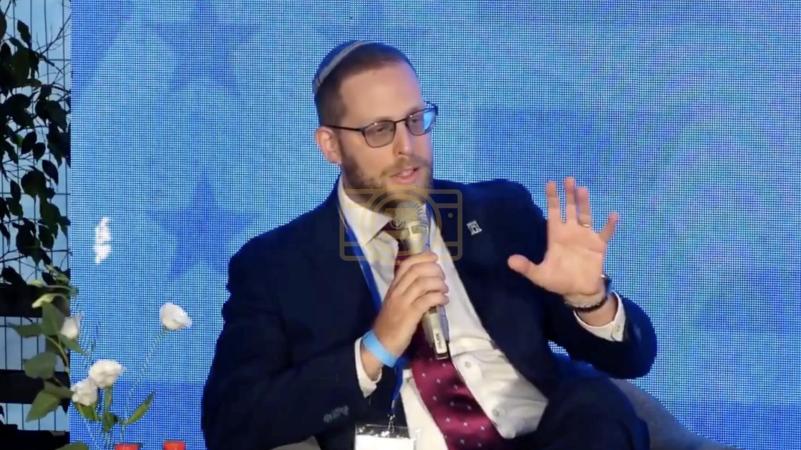
Avraham Shalev of the Kohelet Policy Forum has sparked debate over the relationship between accusations of genocide against Israel and contemporary antisemitism, describing the allegation as what he considers the most significant modern antisemitic libel. Speaking at the Judean Conference, Shalev argued that such accusations can do more than challenge Israel’s military conduct: in his view, they can also legitimize hostility toward Jews by portraying violence against them as justified or defensive. He further warned that Jews participating in public life may face an ideological “purity test,” in which they are expected to condemn Israel or distance themselves from Zionism to be accepted. Shalev presented these dynamics as part of a broader pattern in which opposition to Israel can, in certain circumstances, become hostility toward Jewish identity and collective self-determination. His remarks form part of a wider debate over the boundaries between legitimate criticism of Israeli government policy, anti-Zionism and antisemitism. His characterization, however, is an argument about the political use of genocide allegations, not an established determination that every such accusation is antisemitic.
Shalev also traced the spread of anti-Zionist ideas to decades of influence within academic institutions and political movements across different ideological traditions. He argued that responding to antisemitism requires a long-term strategy that strengthens Jewish identity and Israel’s sovereignty rather than concentrating primarily on confrontations over social media posts and online rhetoric. That approach places national self-determination and the security of Jewish communities at the center of his proposed response. The discussion also raises difficult questions about how antisemitism should be identified without treating all criticism of Israel as prejudice or dismissing serious allegations about conduct during armed conflict. Under international law, genocide has specific legal criteria, including the requirement to establish intent to destroy a protected group, in whole or in part; the accusation must therefore be assessed through evidence and legal analysis rather than political slogans alone. Shalev’s remarks underscore how fiercely contested these questions have become, with implications for Jewish communities, Israel’s international standing and the broader debate over free expression, discrimination and accountability.