BREAKING: NASA Artemis II Returns Safely to Earth.
Gallery
Videos
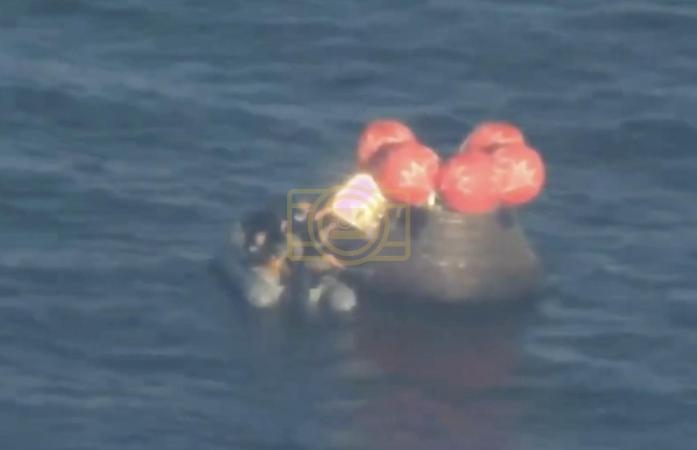
NASA’s NASA has successfully completed the return phase of its Artemis II mission, with the Orion spacecraft safely splashing down in the Pacific Ocean. The mission’s return was confirmed late last night, concluding a landmark deep-space journey designed to test next-generation human spaceflight systems. Recovery teams were deployed immediately after splashdown to secure the capsule and assist in post-landing procedures. Officials described the event as a critical milestone in the broader Artemis program.
The crewed mission carried astronauts Reid Wiseman, Victor Glover, Christina Koch, and Jeremy Hansen on a 10-day lunar flyby, marking the first time humans have traveled beyond low Earth orbit since the Apollo era. During the mission, the crew flew farther from Earth than any previous human spaceflight, providing valuable data on deep-space travel conditions. The spacecraft demonstrated key performance benchmarks under sustained exposure to lunar-distance environments. NASA emphasized that the mission helps validate systems required for future lunar landings.
At the center of the mission was the Orion spacecraft, which successfully executed re-entry procedures and deployed its parachute system for a controlled descent. The spacecraft’s performance during high-speed atmospheric re-entry and ocean splashdown is considered a major validation of its design. Recovery operations were conducted in coordination with naval teams positioned in the Pacific Ocean landing zone. Engineers are now expected to begin detailed post-flight analysis of vehicle performance data.