WARSHIP WARNING: U.S. Carrier Intensifies Operations in Arabian Sea.
Gallery
Videos
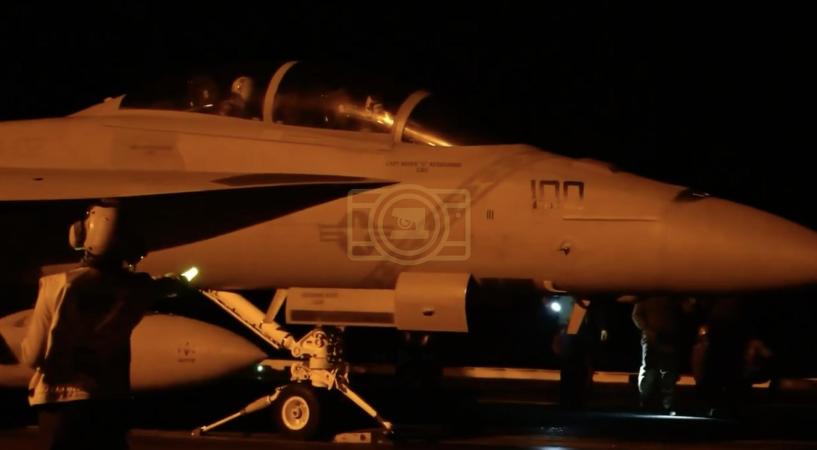
The USS George Washington is now operating in the Middle East as the United States maintains a powerful naval presence near the Strait of Hormuz. U.S. Central Command released footage showing sailors conducting nighttime flight operations aboard the Nimitz-class nuclear-powered aircraft carrier, with F/A-18 fighter jets moving across the deck and launching into the darkness. The carrier arrived in the Arabian Sea on August 19 as part of a scheduled deployment that will bring it into the U.S. military’s Central Command area of responsibility.
The arrival of the George Washington marks a major shift in the region’s carrier posture as it prepares to replace the USS Abraham Lincoln, which has endured an exceptionally long deployment amid the conflict with Iran. The Navy had been conducting flight operations aboard the George Washington while it transited the Indian Ocean, including a major aviation milestone on August 18 when the carrier recorded its 200,000th fixed-wing aircraft recovery. The latest nighttime operations demonstrate that the carrier’s air wing remains active as the ship settles into its new operating environment.
The deployment comes as American forces continue maritime operations around the Strait of Hormuz, one of the world’s most strategically important energy corridors. CENTCOM says U.S. forces have assisted approximately 1,300 commercial vessels in passing through the waterway since early May, with more than 660 million barrels of crude oil transported with U.S. military assistance. The figures underscore the scale of the ongoing mission as Washington seeks to keep commercial traffic moving despite the confrontation with Iran.
For the George Washington’s sailors and aviators, nighttime flight operations are a demanding but routine component of carrier operations, requiring precise coordination between pilots, deck crews, aircraft handlers and launch personnel. The dramatic footage nevertheless carries a broader strategic message, showing that the United States continues to maintain substantial air and naval power in waters close to one of the world’s most contested maritime chokepoints. With the carrier now in the region, Washington has another major platform capable of sustaining combat-air operations at sea.
The deployment also raises questions about what comes next as the U.S.-Iran confrontation continues and the Strait of Hormuz remains under intense military and political pressure. The George Washington’s arrival provides a fresh carrier presence as the Abraham Lincoln begins its return journey after its prolonged deployment. For Iran and other regional actors, the nighttime launches offer a highly visible reminder that American naval aviation remains positioned to respond rapidly to developments across the Middle East.