ANOTHER BLAST, ANOTHER TUNNEL: IDF Targets Hezbollah's Hidden Arsenal
Gallery
Videos
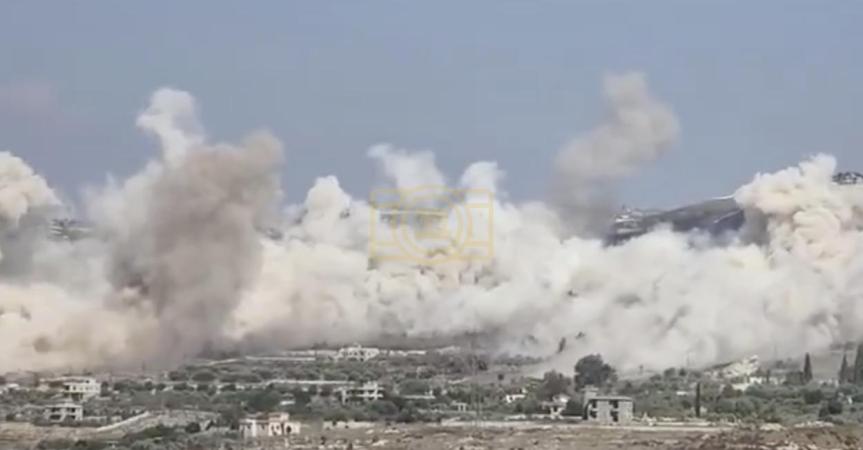
Huge plumes of smoke rose over the hilly village of Bani Haiyan in southern Lebanon this morning after large-scale explosions tore through what Israeli forces describe as a network of Hezbollah tunnels and underground infrastructure. Footage of the blasts shows the detonations sending debris and dust high into the air above the village, a now-familiar scene in a region that has become a frequent target of Israeli operations aimed at dismantling Hezbollah's extensive tunnel systems. The strike is being framed as part of the Israel Defense Forces' ongoing campaign inside a designated security zone in southern Lebanon, an effort focused specifically on eliminating underground facilities that Israeli officials say Hezbollah has used to stage cross-border attacks.
These tunnel networks aren't simple hideouts; Israeli officials have repeatedly described them as sophisticated, Iranian-supported infrastructure projects, some stretching hundreds of meters underground and stocked with weapons, launch shafts, and equipment specifically designed for striking Israeli territory. In one comparable operation earlier this year, the IDF destroyed a 200-meter tunnel complex in the village of Majdal Zoun that Israeli officials said held drones, warheads, explosives, and multiple launch shafts, built with Iranian expertise and used to fire on communities in the Galilee region. That strike, like today's operation in Bani Haiyan, occurred despite the existence of a U.S.-mediated ceasefire framework between Israel and Lebanon, underscoring just how frequently these kinds of targeted demolitions have continued even amid nominal diplomatic efforts to de-escalate the broader conflict.
This pattern reflects a broader Israeli military strategy that has unfolded steadily throughout 2026: rather than a single decisive operation, Israel has pursued a rolling campaign of controlled demolitions targeting Hezbollah's underground assets one facility at a time. Israeli officials maintain that these tunnels represent a direct and ongoing threat to communities in northern Israel, arguing that Hezbollah has continued rebuilding and utilizing such infrastructure even after previous rounds of conflict and multiple ceasefire agreements. Lebanese authorities and Hezbollah itself have not always disputed the existence of these networks, but disagreements persist over their scale, purpose, and whether such Israeli strikes violate the terms of ceasefire arrangements meant to have ended active hostilities between the two sides.
The recurrence of these tunnel-demolition operations, now a regular feature of the security landscape in southern Lebanon, illustrates just how unresolved the underlying conflict between Israel and Hezbollah remains, despite periodic claims of de-escalation. For residents of villages like Bani Haiyan, life continues under the constant possibility of sudden, massive explosions tied to a shadow war being waged largely beneath their feet. Whether these repeated strikes are meaningfully degrading Hezbollah's long-term capabilities, or simply prompting the group to rebuild elsewhere, remains an open question that will likely only be answered by whether such operations continue at their current pace well into the future.