NASA Celebrates Crew-12 Arrival on International Space Station.
Gallery
Videos
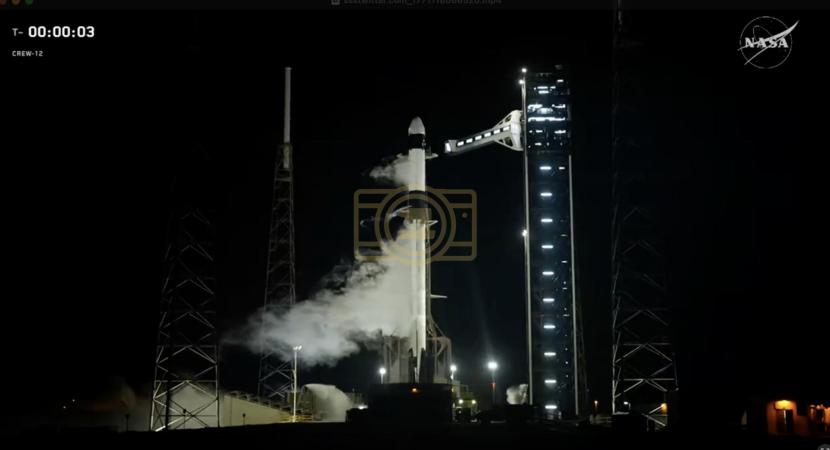
SpaceX’s Falcon 9 successfully launched the Crew-12 mission early February 14, 2026, from Kennedy Space Center, sending a four-person international team to the International Space Station (ISS). The Dragon spacecraft docked flawlessly at 3:15 p.m. ET, expanding the ISS crew complement from four to seven for Expedition 74.
The Crew-12 team includes NASA astronauts Jessica Meir and Jack Hathaway, ESA’s Sophie Adenot, and Roscosmos’ Andrey Fedyaev. Their mission focuses on advanced microgravity research, with experiments spanning medical, biological, and agricultural applications. Studies include the behavior of pneumonia bacteria for potential heart treatment innovations, as well as automated plant systems designed to improve space-based food production, advancing long-duration mission sustainability.
NASA praised the launch as a demonstration of the continuing collaboration between public space agencies and commercial partners. The Falcon 9 launch vehicle provided reliable transport, and the Dragon spacecraft’s precise docking sequence highlights the operational maturity of crewed commercial spaceflight, ensuring crew safety while enabling complex scientific operations aboard the ISS.
The success of Crew-12 contributes to ongoing international research efforts in microgravity, offering insights with applications both on Earth and in future deep-space missions. This mission exemplifies the integration of multinational expertise, technology, and logistics in maintaining continuous human presence in orbit while pushing the boundaries of science and exploration.
With the expanded Expedition 74 crew now aboard, the ISS can sustain a higher tempo of research activities and support additional long-duration experiments, bolstering knowledge in human health, biology, and sustainable life support systems. The mission also demonstrates the seamless coordination between NASA, ESA, and Roscosmos in executing complex orbital operations and advancing the global space science agenda.