MISSION ACCOMPLISHED, AGAIN: Trump's AI Warship Video Sparks Fresh Firestorm
Gallery
Videos
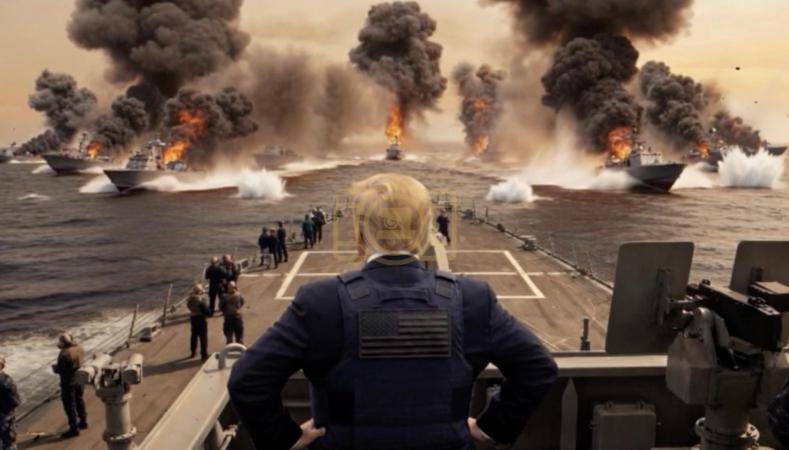
President Trump has once again turned to Truth Social to make his case, this time posting an AI-generated video that shows him standing on the deck of a warship in a tactical vest, watching a sprawling naval battle unfold with ships exploding in the background. The post frames the image as Trump personally commanding American forces, tying it directly to claims that the United States has decisively "turned the tide" against Iran and won its intervention in Venezuela. This isn't the first time the president has shared fabricated military footage to make a political point. Just last week, he posted an AI-generated clip appearing to show missiles obliterating oil infrastructure on Iran's Kharg Island, a video Vice President JD Vance later described as a warning meant to signal there would be consequences if Iran kept threatening commercial shipping in the Strait of Hormuz.
The claims embedded in the video aren't entirely detached from real events, even if the imagery itself is invented. Earlier this year, U.S. forces carried out a operation that resulted in the capture of Venezuelan President Nicolás Maduro in early January 2026, an operation that reportedly unfolded with minimal American casualties. In the aftermath, the United States struck a deal giving it majority control over Venezuela's oil reserves, the largest proven reserves in the world, a claim that lines up with the video's assertion of "oil gains" from the Venezuela operation. On the Iran front, the U.S. military did engage in direct strikes earlier in the year, and by mid-March, Trump was already declaring the U.S. had beaten Iran "militarily, economically, and in every other way," calling on countries that receive oil through the Strait of Hormuz to take precautions.
That declaration came months before this latest post, which is where the sharper edge of the statement comes in: the tide, by most accounts, had already turned against Iran well before Trump's newest video framed it as a fresh, ongoing development. A ceasefire and formal agreement to end the conflict and reopen the Strait of Hormuz was reportedly signed back in June, with Trump and Iranian President Masoud Pezeshkian signing a memorandum during a dinner with French President Emmanuel Macron at the Palace of Versailles. Despite that resolution, tensions have clearly not disappeared, as a U.S. naval blockade of Iran was reportedly reinstated in mid-July and remains active. The gap between when the tide actually turned and when the White House chose to dramatize it with a warship video is exactly the kind of discrepancy that has fueled skepticism among critics who see these posts as theater rather than reporting.
Reaction to the video has split sharply along predictable lines, mirroring the response to Trump's earlier AI-generated content. When he shared the Kharg Island clip, observers noted it wasn't clear whether Trump believed the footage was real when he posted it, or whether he understood it depicted something that hadn't actually happened, with Vance later explaining the president "likes to switch it up" on social media. Supporters treat these videos as bold, symbolic statements of American strength, while critics call them manipulative propaganda that blurs the line between real military accomplishments and digital fabrication. Whatever the intent, the pattern suggests Trump has found a new communication tool in AI-generated imagery, one that lets him narrate battlefield outcomes in real time, regardless of when those outcomes actually occurred.