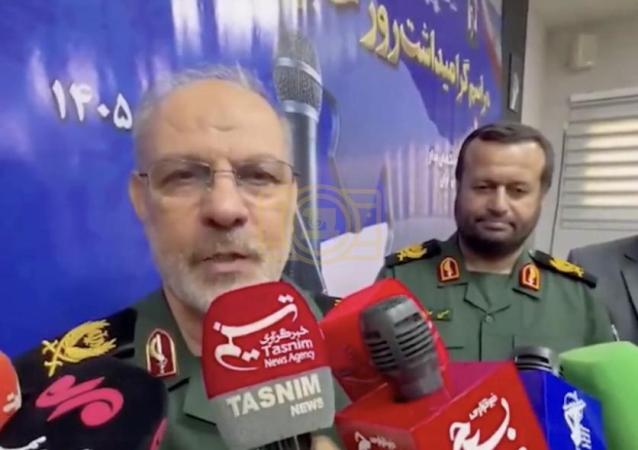
IRGC Spokesman: Hormuz Reopening Requires Full Conditions.

Gallery
Videos
IRGC Demands US Accept Iran’s Terms to Reopen Hormuz
IRGC spokesman Hossein Mohebbi declared that reopening the Strait of Hormuz depends entirely on the United States accepting Tehran’s conditions. He described the waterway as far more than an economic route, calling it a core component of Iran’s geographical and strategic power. The remarks come amid a months-long conflict between the United States and Iran that began in February 2026 and has repeatedly disrupted traffic through the critical chokepoint. Roughly 20 percent of the world’s oil trade normally passes through the strait, making any prolonged closure a direct threat to global energy markets.
Mohebbi’s statement makes clear that Iran intends to use control of the strait as leverage in ongoing tensions. He indicated that any full reopening is independent of separate talks involving Oman and requires the U.S. to end what Tehran calls interference in regional discussions. The comments reinforce the regime’s longstanding strategy of converting a vital international waterway into a tool of political pressure. Energy prices have already reflected the uncertainty created by the prolonged standoff.
The Trump administration has so far shown no willingness to meet Iranian demands or ease pressure in exchange for restored shipping access. Officials continue to treat freedom of navigation as non-negotiable and view Iranian attempts to dictate terms as further evidence of the regime’s destabilizing behavior. By framing the strait as an instrument of strategic power, the IRGC is openly acknowledging that commercial traffic remains secondary to Tehran’s geopolitical goals.
The latest comments from Mohebbi leave little room for ambiguity: Iran will keep the strait restricted until it extracts concessions from Washington. That position hardens the confrontation and underscores why sustained American resolve remains essential. As long as the regime prioritizes leverage over normal commerce, the disruption to global energy flows is likely to continue.