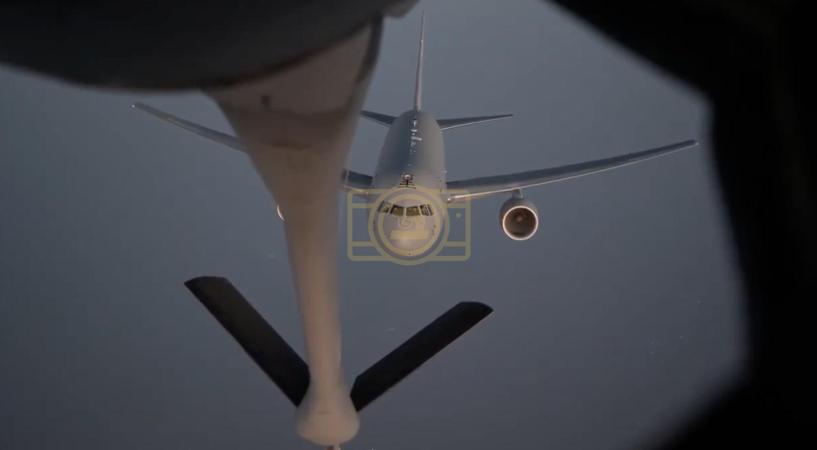
FUELING THE FLIGHT: U.S. Tanker Refuels Fighters in Middle East Skies.
Gallery
Videos
The U.S. military has showcased a striking demonstration of American airpower over the Middle East, with a KC-135 Stratotanker refueling F-16 fighter jets and a KC-46 Pegasus in flight. The footage released by U.S. Central Command highlights how American aircraft can remain airborne for extended periods without returning to base for fuel. That capability is a critical part of sustaining fighter patrols and other air operations across the vast CENTCOM area of responsibility. CENTCOM has separately released footage of similar KC-135 refueling missions involving F-16s during August 2026.
Aerial refueling may look routine, but it is one of the foundations of modern long-range air operations. Fighter aircraft such as the F-16 can extend their operational reach, remain on station longer and maintain greater flexibility when supported by tanker aircraft. The KC-135, which has served as a backbone of U.S. aerial refueling operations for decades, can transfer fuel while both aircraft remain in flight. The presence of a KC-46 alongside the F-16s also underscores the layered tanker capability available to U.S. forces in the region.
The timing of the footage gives the operation added significance. It comes after months of intense U.S. military activity involving Iran and as Washington continues to assess the future size and posture of American forces across the Gulf and broader Middle East. CENTCOM's own 2026 operational materials identify both KC-135 and KC-46 aircraft among the U.S. assets used in regional operations, alongside F-16s and other advanced aircraft.
For U.S. commanders, maintaining this kind of airborne support can provide a major operational advantage. Tankers allow fighter aircraft to operate farther from their bases, respond more quickly to developing threats and sustain patrols without repeatedly breaking away for ground-based refueling. That becomes particularly important in a region where distances are enormous and potential flashpoints can emerge with little warning.
The footage therefore sends a message beyond the mechanics of aircraft refueling: despite discussions about the future U.S. military footprint in the Middle East, American airpower remains capable of sustaining sophisticated operations across the region. The key question is how long Washington intends to maintain that level of capability and whether the tanker-supported fighter presence will remain a central part of its regional strategy. For now, the KC-135, F-16s and KC-46 operating together offer a vivid picture of the reach and endurance still available to U.S. forces above the Middle East.