POLITICAL EARTHQUAKE: Merz Warns Germany Cannot Return to Business as Usual After AfD Win

Gallery
Videos
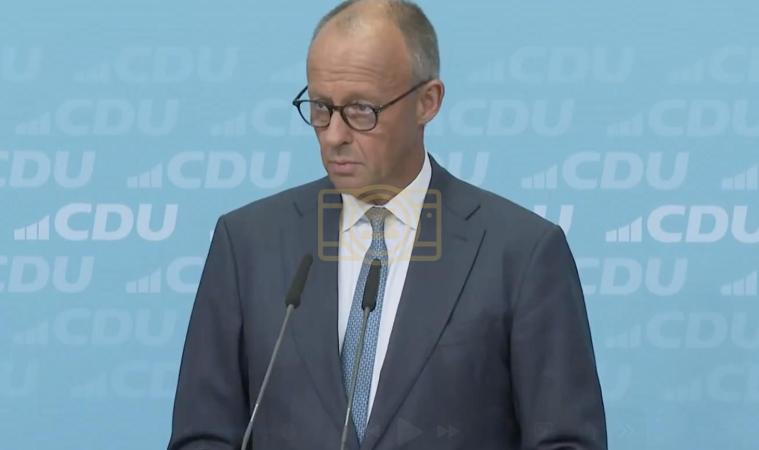
German Chancellor Friedrich Merz has described the Alternative for Germany’s strong performance in the Saxony-Anhalt state election as a result that prevents any return to politics as usual. Speaking after the vote, Merz said his Christian Democratic Union “did not expect” the outcome “in this form.” He stressed that the scale of the shift demands a serious response from mainstream parties and from the federal government. The chancellor accepted the democratic result while acknowledging its broader implications for German politics. His comments reflected the depth of the setback suffered by the CDU in a state it had long dominated.
Official results show the AfD secured 43.8 percent of the vote and 39 of the 83 seats in the state parliament. The party more than doubled its share from the 2021 election and won 38 of the 41 direct constituencies. Despite this commanding lead, it fell three seats short of an absolute majority. The high turnout of 77.8 percent underscored the intensity of voter engagement and the breadth of the shift away from traditional parties. Large numbers of former CDU supporters moved to the AfD, contributing to the conservatives’ sharp decline.
The CDU itself dropped to 17.2 percent, nearly halving its previous result and recording one of its weakest performances in the state. Other established parties also finished in single digits, leaving the parliament fragmented. The Sahra Wagenknecht Alliance crossed the threshold and gained representation, further complicating the arithmetic of coalition building. Mainstream parties continue to uphold their long-standing refusal to form any governing alliance with the AfD. This firewall has left government formation stalled as no clear alternative majority has emerged.
AfD leaders have claimed a mandate to govern and called on individual conservative lawmakers to consider cooperation. The party’s candidate for state premier has argued that the result reflects deep dissatisfaction with current policies on migration, the economy and other issues. At the same time, opponents warn that any opening toward the AfD would break a post-war political consensus. The absence of an absolute majority means negotiations or new elections remain possible outcomes in the coming weeks. Local and national attention is now focused on whether the firewall holds under pressure from the scale of the victory.
Merz linked the result to wider challenges facing his government and the country. He noted that a significant share of voters had chosen parties that question established democratic institutions and rules. The chancellor said he takes personal responsibility for the outcome seriously and rejected any suggestion of stepping aside. He called for profound reforms and a more effective way of connecting with citizens who feel left behind. The election is widely viewed as a warning signal for upcoming state contests and for the federal political landscape.
The high turnout and the concentration of AfD support across most constituencies point to a structural change in voter behavior in eastern Germany. Analysts note that economic concerns, migration debates and distrust of Berlin’s leadership all played roles in the shift. For now, Saxony-Anhalt faces an uncertain period of talks as parties dig in around the firewall. Merz’s insistence that business as usual is no longer possible sets the tone for how the national debate will unfold in response to this historic state result. The coming days will test whether mainstream parties can adapt without abandoning their core positions.