NATO Chief Criticizes Trump and Musk Over Wrong Approach on X.

Gallery
Videos
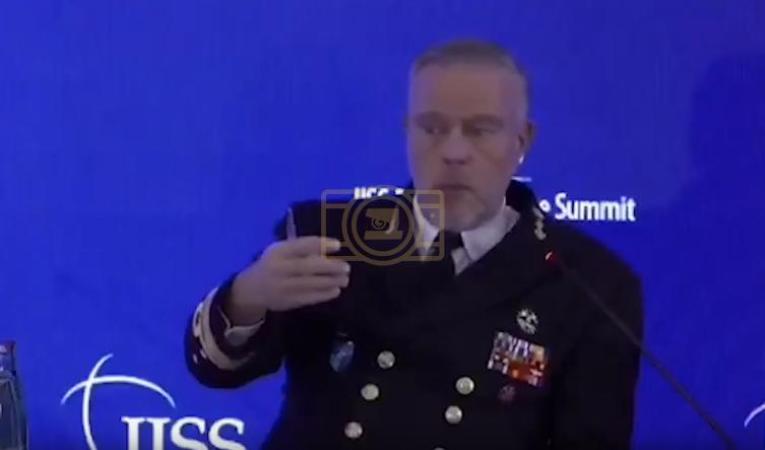
Admiral Rob Bauer, Chair of NATO’s Military Committee, issued pointed criticism toward former President Donald Trump and tech entrepreneur Elon Musk, claiming that their approach on X is “not necessarily the right one.” His comments came during a December 4, 2025 briefing focused on disinformation—an issue NATO has repeatedly framed as a growing hybrid threat to Western societies.
While asserting that he supports freedom of speech, Bauer suggested that X under Musk has shifted from an open discussion platform to one increasingly dominated by bot amplification, foreign manipulation, and divisive content engineered to destabilize democratic countries. His remarks fit NATO’s long-running narrative that online spaces must be tightly moderated to counter external threats, particularly from actors like Russia.
This perspective is not new. In 2024, NATO-backed reports flagged Russian bot farms for trying to influence national elections across Europe. Now, EU studies have claimed a 30% increase in verified disinformation since Musk rolled back moderation policies and restored broader speech rights on X.
Trump’s presence on the platform has further intensified the conversation. His return to X brought millions of users back to the platform, bolstering the reach of American populist messaging—an outcome NATO officials often view as politically destabilizing. For many observers supportive of free expression, Bauer’s remarks reveal discomfort within NATO leadership over platforms they cannot fully influence, especially ones amplifying viewpoints that challenge transnational institutions.
Supporters of the Trump administration and advocates for robust free speech argue that NATO’s critique is less about combating “hybrid threats” and more about controlling public narratives. They contend that Musk’s reforms—reducing censorship, restoring banned accounts, and dismantling opaque moderation systems—represent a necessary correction after years of political bias embedded in social media governance.
The clash underscores a broader ideological conflict: global institutions advocating centralized information control versus platforms and political leaders who champion open debate, transparency, and democratic access to information. Bauer’s public rebuke signals that this tension will only escalate as Western electorates grow increasingly skeptical of establishment structures and more reliant on decentralized digital platforms.
Ultimately, the controversy highlights the divide between NATO’s preferred information doctrine and the free-speech-first model advanced by Trump and Musk. With the 2026 elections approaching across multiple countries, the struggle for public narrative control is only beginning—and X remains the battleground where these opposing visions collide.