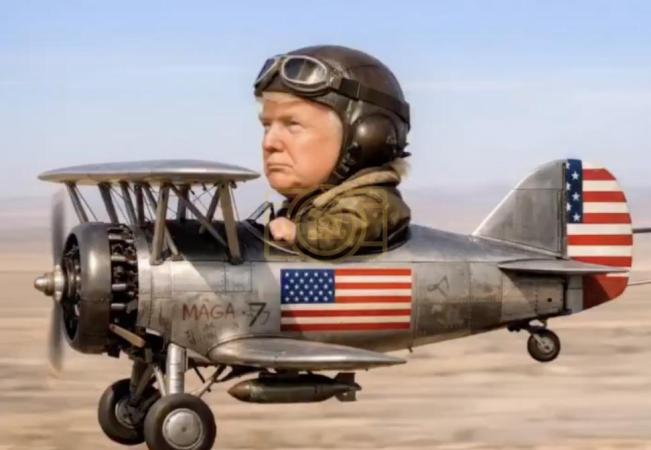
😂 Cute President Trump Confronts Iranian Regime.
Gallery
Videos
A satirical animation circulating online is drawing significant attention for its stylized portrayal of former President Donald Trump piloting a cartoon biplane in a fictional strike against caricatured Iranian regime figures. Rendered in a playful “chibi” style reminiscent of Japanese pop animation, the short video contrasts its lighthearted visual tone with the gravity of the geopolitical tensions it references, particularly the ongoing debate over U.S. military options should diplomacy with Tehran collapse.
While some viewers have characterized the animation as humorous political commentary, its underlying message reflects a serious strategic reality: discussions in Washington and among allied governments about how to respond if Iran continues advancing its nuclear program or escalates proxy activity across the Middle East. The imagery of an airborne strike, though presented in exaggerated cartoon form, mirrors real-world conversations about deterrence, force posture, and the credibility of American red lines.
Supporters of a harder policy toward Tehran argue that satire has long served as a tool to communicate political positions in an accessible format, especially on digital platforms where younger audiences consume news through visual media. In this context, the animation functions less as a literal depiction and more as symbolic messaging aligned with the broader “peace through strength” framework that emphasizes military readiness as a means of preventing conflict rather than initiating it.
Critics, however, contend that the use of playful imagery to depict potential military action risks trivializing the human consequences of war, particularly for civilians who would bear the brunt of any large-scale confrontation. This tension between satire and sensitivity is not new in political discourse, but it becomes more pronounced when the subject involves active regional flashpoints and the possibility of real-world escalation.
Notably, reactions from Iranian state-linked commentators have been muted publicly, though the broader population inside Iran continues to face economic hardship, political repression, and international isolation driven by the regime’s policies. Analysts point out that internal dissatisfaction within Iran is shaped far more by domestic governance issues than by foreign satire, even as external messaging becomes part of the information landscape surrounding the standoff.
The animation’s viral spread underscores how modern geopolitical narratives are increasingly shaped not only by official statements and military deployments but also by digital culture, memes, and user-generated content. These formats can amplify political viewpoints rapidly, influence public perception, and contribute to the broader strategic communications environment in which state and non-state actors compete for narrative dominance.
Ultimately, the episode highlights the intersection of media, politics, and national security at a time when U.S.–Iran relations remain highly volatile. As diplomatic channels remain fragile and military contingencies are openly discussed, even satirical content becomes a reflection of deeper anxieties about where the confrontation could lead and how different audiences interpret the signals being sent.