NO WARNING SHOTS LEFT: US Destroys Five Iranian Oil Carriers in Retaliation
Gallery
Videos
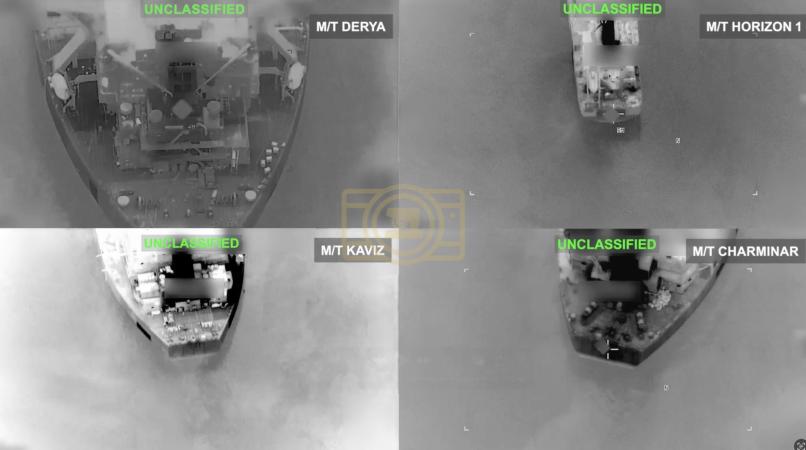
US Central Command destroyed five Iranian crude oil carriers on September 8 after Iran's Islamic Revolutionary Guard Corps twice attempted to strike a US Navy warship with ballistic missiles over the preceding two days. CENTCOM identified four of the vessels, the M/T Kaviz, M/T Charminar, M/T Horizon 1, and M/T Riesco, as being struck and destroyed in the Gulf of Oman, while a fifth ship, the M/T Derya, was hit near Kharg Island, Iran's primary crude oil export hub in the Persian Gulf. Despite the repeated missile attempts, the targeted US warship successfully evaded both attacks and remained on active patrol in regional waters, with CENTCOM confirming no American personnel were harmed. Before launching the strikes, American forces reportedly instructed the crews aboard each vessel to abandon ship, and Iranian state media confirmed that crew members from at least two of the tankers were later brought ashore safely by lifeboat.
Video released alongside the CENTCOM statement offers a dramatic look at how the operation unfolded. Thermal and aerial footage shows precision strikes hitting the ships in rapid succession, producing heavy smoke and fires across multiple vessels. According to detailed accounts of the strike, the Kaviz, Horizon 1, and Derya were each hit with missiles aimed at their steering and engine compartments, while the Charminar and Riesco were struck with bombs. The Riesco appears to have suffered the worst damage, with footage showing the ship fully engulfed in flames before ultimately sinking in the Gulf of Oman. CENTCOM described all five vessels as part of what it called a multibillion-dollar shadow network used to finance the IRGC and its regional proxies, framing the strike as an economic blow as much as a military one.
This marks the second major American strike on Iran's maritime fleet within just three days, following a similar operation on September 5 that destroyed three additional tankers after the IRGC launched ballistic missiles at a US aircraft carrier and destroyer. That earlier incident prompted a blunt warning from Admiral Brad Cooper, the CENTCOM commander, who stated plainly that any Iranian strike on American ships would be met with an even greater cost to Iran's exposed and limited oil fleet. The latest strike appears to make good on that promise, escalating the exchange rather than deterring it. In the hours that followed the September 8 strike, Iran's Revolutionary Guard Navy issued fresh warnings to tanker crews operating near Kuwait and Bahrain, telling them to abandon their vessels immediately or risk being targeted in further retaliation.
Iran's response came quickly and struck further from the immediate conflict zone than in previous rounds. Overnight, Iranian forces launched a barrage of ballistic missiles at Muwaffaq Salti Air Base in Jordan, a facility that hosts American air operations, marking the first time in this cycle of strikes that Iran has reached as far west as Jordanian territory. Jordanian and allied Patriot batteries intercepted the majority of the incoming missiles, though the attack still represented a significant widening of the conflict's geographic scope. With oil prices climbing toward the $100-a-barrel mark and both sides now trading strikes roughly every few days, this latest exchange over a handful of oil tankers has evolved into one of the most volatile and rapidly escalating fronts of the broader US-Iran confrontation.