IMPORT BANS HIT: Trump Blocks Canadian Alcohol, Dairy and Motorcycles
Gallery
Videos
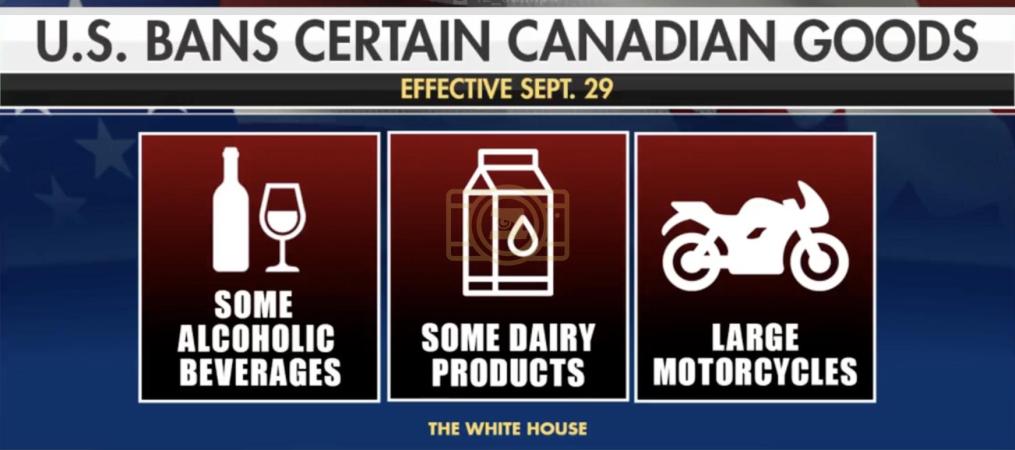
The United States is intensifying its trade conflict with Canada by moving beyond tariffs to outright import bans on selected products. President Donald Trump has ordered that certain Canadian alcohol, dairy items and motorcycles be blocked from entering the American market. The bans take effect on September 29, 2026. At the same time, the administration is adjusting the list of Canadian goods subject to 50 percent tariffs, with those changes scheduled for September 15.
The new restrictions cover a range of alcoholic beverages including beer, wine and spirits, along with dairy products such as whey and molasses, and larger motorcycles and mopeds. Officials say the measures respond to what the White House describes as continued Canadian discrimination against American commerce, particularly in dairy and alcohol markets. The actions are being carried out under Section 338 of the Tariff Act of 1930, a provision that allows the president to address unequal treatment of U.S. goods.
These steps follow Canada’s decision to impose retaliatory tariffs on approximately $20 billion of American exports after trade talks collapsed in August. Canadian Prime Minister Mark Carney had framed the Canadian tariffs as a dollar-for-dollar response to earlier U.S. duties. Washington has now chosen to replace some of those earlier 50 percent tariffs with complete import prohibitions on the listed items. Other products are being added to or removed from the tariff list in an effort to refine the pressure.
The White House has presented the bans as a necessary reaction to longstanding market-access barriers that American producers face in Canada. Dairy supply management, provincial alcohol distribution rules and related practices have been points of friction for years. By shifting from tariffs to exclusion, the administration signals that it is prepared to escalate further if Ottawa does not alter its approach. Canadian exporters in the affected sectors now face the loss of a major market rather than simply higher costs.
Businesses on both sides of the border are assessing the practical impact. Canadian alcohol and dairy producers that relied on U.S. sales must look for alternative markets or absorb significant losses. American importers and consumers of those products will see reduced availability and potentially higher prices for substitutes. The motorcycle ban adds another layer of disruption for a specialized segment of the market. The overall volume of trade affected by the bans is smaller than the broader tariff measures, yet the complete prohibition carries a sharper symbolic and commercial weight.
The latest moves leave the U.S.-Canada trade relationship in a more confrontational state than at any point in recent decades. Both governments continue to express openness to renewed negotiations in principle, but the accumulation of tariffs and now import bans raises the cost of any future compromise. For the moment, the dispute is being fought through successive rounds of economic measures rather than through agreement at the negotiating table.