STILL NOT OVER: Nepal Faces New Flood Threat After 1,300 Deaths
Gallery
Videos
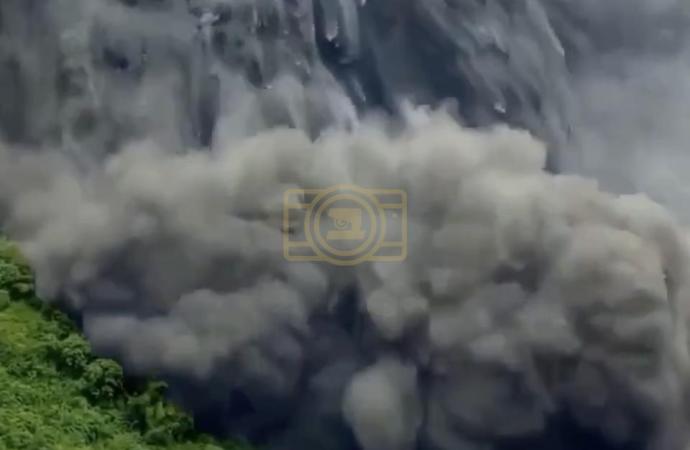
Just days after Nepal buried more than 1,300 victims of one of its deadliest flood disasters in recent memory, the mountainous far-west of the country is facing a fresh scare. A massive landslide tore down a steep Himalayan slope in the Bhattar area of Api Himal Rural Municipality, Darchula District, sending huge volumes of rock, soil, and debris crashing into the Chaulani River. Dramatic video footage circulating online captured the moment a large section of mountainside gave way, unleashing thick clouds of dust that billowed through the valley as material thundered down toward the water below. The sheer scale of the collapse briefly disrupted the river's natural flow, immediately raising alarm among local officials who understand all too well the deadly potential of blocked Himalayan waterways.
The Darchula District Administration Office moved quickly once reports of the landslide came in, warning residents that continued slides from the unstable slope above could fully block the river rather than just partially obstruct it. That distinction matters enormously in mountainous terrain like this, since a complete blockage followed by a sudden breach can send a wall of water and debris rushing downstream with little warning, a phenomenon that has proven catastrophic in past Himalayan disasters. As a precaution, authorities relocated roughly ten families living in the most vulnerable areas along the riverbank, while security personnel were deployed to monitor the site and keep residents informed as conditions developed. Local officials confirmed that an official damage assessment was still underway even as police were dispatched to inspect the site directly.
By the time the situation had settled, the river's flow reportedly normalized, easing some of the immediate anxiety, though officials stressed that monitoring would continue given the unstable condition of the slope above. The Chaulani River, also known locally as the Chameliya, is not an isolated waterway; it eventually feeds into the Mahakali River, which forms part of the border between Nepal and India, meaning any major disruption here carries the potential to affect communities across two countries. That cross-border dimension has kept authorities on both sides watching closely, even as this particular incident has so far remained localized and far smaller in scale than the catastrophic flooding that struck Nepal in late August.
That earlier disaster, triggered by a high-altitude rock-and-ice avalanche near the Nepal-Tibet border, unleashed devastating flash floods through the Trishuli River system and left more than 1,300 people dead, with recovery efforts still ongoing in some areas. This latest landslide, while far more contained, serves as a stark reminder that the underlying conditions responsible for that tragedy, steep unstable terrain combined with intense seasonal rainfall, haven't gone anywhere. For communities living along Nepal's mountain rivers, the psychological toll of watching another slope give way so soon after such enormous loss is its own kind of burden, even when the immediate danger passes without further casualties. Authorities' swift response this time, from evacuations to continuous monitoring, reflects lessons clearly being applied in real time, but it also underscores just how precarious life remains for those living beneath Nepal's increasingly unstable Himalayan slopes.