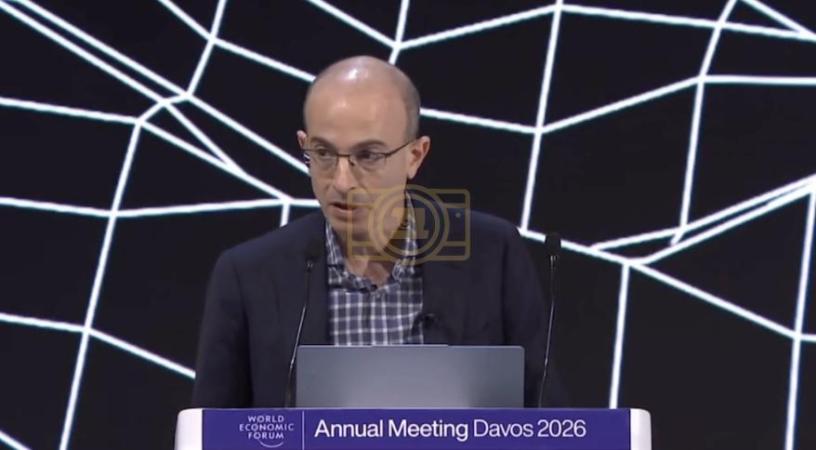
Yuval Harari Warns AI Could Dominate Word-Based Religions.

Gallery
Videos
Yuval Noah Harari, historian and author, warned at the World Economic Forum’s 2026 Annual Meeting in Davos that artificial intelligence could take over domains based entirely on words, including religious traditions such as Judaism. Harari highlighted that “Judaism calls itself the religion of the book, and it grants ultimate authority not to humans, but to words,” illustrating how AI could assume interpretive authority in textual systems where language governs belief and practice.
The remarks build on Harari’s prior statements, including a 2023 warning that AI could rewrite scriptures and foster globalized religions. By mastering language, machines may potentially challenge the traditional authority of rabbis, priests, and other religious scholars, raising profound questions about human oversight and the future of textual interpretation.
Experts observing Harari’s comments note that AI’s capacity to analyze, generate, and reinterpret texts at scale could reshape education, theology, and cultural transmission. While such developments could enhance accessibility and engagement with sacred texts, they also pose ethical and philosophical dilemmas regarding authenticity, authority, and the human role in spiritual guidance.
Harari’s perspective underscores the broader discourse on AI’s societal impact, highlighting the intersection of technology, culture, and belief systems. As AI continues to advance, religious institutions and communities may face unprecedented choices about how to preserve human interpretive authority in the face of machine-driven textual analysis.