Kataib Hezbollah Uses Fiber-Optic Drones Against U.S. Base.
Gallery
Videos
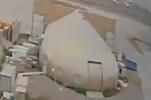
First-person footage has emerged showing an Iranian-backed militia using fiber-optic FPV drones to target U.S. forces at Camp Victory, located at Baghdad International Airport, Iraq. The attack, carried out on March 15, 2026, involved six kamikaze-style drones, five of which were successfully intercepted by U.S. air defenses. Only minor damage was reported, and no casualties occurred during the strike.
The drones, controlled via fiber-optic cables rather than traditional radio signals, allow operators to evade electronic jamming and conduct precise attacks over distances up to 20 kilometers. This low-cost innovation, estimated between $500 and $1,000 per unit, has enabled Iranian proxy groups like Kataib Hezbollah to enhance their tactical capabilities and challenge conventional U.S. defenses.
Analysts note that these attacks represent a significant escalation in the ongoing U.S.-Iran confrontation, as proxy groups increasingly leverage advanced drone technology to strike American assets in Iraq and across the region. The March 2026 wave of drone strikes highlights vulnerabilities in current electronic warfare systems and underscores the evolving nature of asymmetric threats.
The use of fiber-optic FPV drones demonstrates a strategic shift toward precision, low-cost, and hard-to-counter attacks by Iranian proxies. Observers warn that continued innovation in this area could force U.S. and allied forces to adapt defensive measures, including improved detection systems and counter-drone tactics, to maintain operational security in volatile theaters.
The strike on Camp Victory also underscores the broader geopolitical tension between the United States and Iran, with proxy forces serving as key instruments in Tehran’s regional strategy. As drone technology continues to proliferate, similar attacks may become more frequent, signaling the need for rapid adaptation by military planners and policymakers.