SMALL POTATOES: Trump Shrugs Off Six-Month Iran War
Gallery
Videos
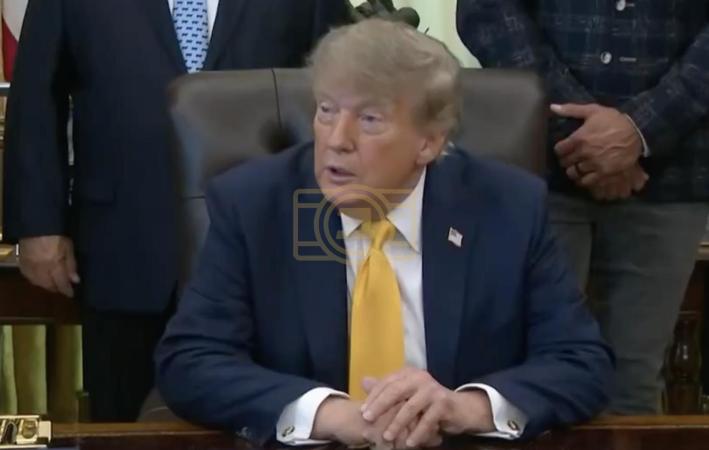
President Trump described the ongoing U.S. conflict with Iran as "small potatoes" during an Oval Office exchange with reporters, delivering the remark as he defended Vice President JD Vance's earlier assertion that the fighting shouldn't be called a "war." "A lot of people don't call it a war. I call it a military conflict because it's small potatoes for us," Trump said, adding, "It's not a big thing." The comment came a day after Vance told reporters at a White House briefing that he "wouldn't call it a war," arguing that major combat operations had only lasted about six weeks even though he acknowledged the fighting had "flared up" in various places since then. Trump said there was "a lot of truth" to what Vance had said, and characterized current U.S. actions as "intermittent strikes," insisting "we're not fighting right now."
The remarks stand in contrast to the toll the six-month conflict has taken. Eighteen U.S. service members have died since fighting began on February 28, and the war has cost American taxpayers more than $37.5 billion, according to reporting on the exchange. When a reporter pressed Trump on using the phrase "small potatoes" given those losses, he grew visibly irritated and compared the death toll favorably to far larger American conflicts, noting that Vietnam alone claimed roughly 100,000 American lives compared to 18 in the current fighting. "I don't think it matters what you call it. What matters is the fact we have had tremendous success. We've stopped Iran from having a nuclear weapon," Trump said, framing the war's outcome as a clear victory regardless of terminology.
Trump also pointed to U.S. control over the Strait of Hormuz as evidence of the conflict's limited scope from Washington's perspective, saying "we control it very strongly" and that the U.S. is "taking out a lot of oil" from the region. He drew a comparison to the January operation in Venezuela that resulted in the capture of former President Nicolás Maduro, noting that no American lives were lost in that mission, unlike the ongoing fighting with Iran. Still, the war has driven global energy prices higher, with AAA reporting average U.S. gas prices around $4.15 per gallon, nearly a dollar higher than the previous year, and Vance himself acknowledged this week that prices "could have been much, much higher" without the administration's actions in the conflict.
The messaging from both Trump and Vance appears aimed at minimizing the political weight of the war as the 2026 midterm elections approach, with Republicans hoping to preserve their narrow congressional majorities. Public opinion on the conflict remains sharply negative, with a Reuters/Ipsos poll released this week finding that nearly six in ten U.S. adults disapprove of the military strikes on Iran. As the war enters its seventh month with peace talks stalled and no clear resolution in sight, the administration's effort to reframe the fighting as limited and largely resolved faces a persistent gap between its rhetoric and the war's continuing human, financial, and economic costs.