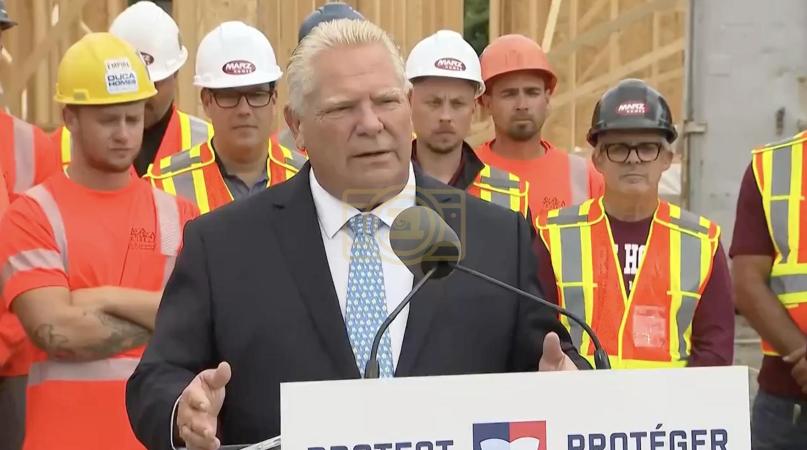
Ford Warns Trump Underestimates Canada and Will Face Full Resource Retaliation.
Gallery
Videos
Ontario Premier Doug Ford has issued a blunt warning that Canada is prepared to inflict serious economic pain on the United States in response to ongoing trade tensions. Speaking amid the 2026 trade dispute, Ford declared that Ontario is ready to “throw everything and the kitchen sink” at the Americans, specifically naming electricity, fuel, potash, and uranium as leverage points. He stated that these critical resources can be used to put massive pressure on the U.S. economy. Ford added that President Trump underestimates Canada and that this miscalculation is a serious mistake.
The premier’s comments come as the United States has already imposed 50 percent tariffs on Canadian automobiles, trucks, automotive parts, and steel. Those duties have raised costs for Canadian exporters and intensified political friction between the two countries. Ford is now advocating an aggressive counter-strategy that targets American dependence on Canadian energy and raw materials. By threatening to restrict or raise the price of electricity, fuel, potash, and uranium, he aims to demonstrate that Canada holds significant cards in the dispute.
President Trump had earlier criticized Ford directly in a Truth Social post, comparing him unfavorably to his late brother Rob Ford and accusing Canada of long-term reliance on the United States for energy and economic support. Trump warned that further escalation would bring even worse consequences for Canada. Ford’s latest remarks appear to be a direct rejection of that assessment. The Ontario leader is signaling that any assumption of Canadian weakness is misplaced and that retaliation will be broad and painful.
The resources Ford listed are not minor exports. Canadian electricity flows into several northern U.S. states, potash is essential for American agriculture, uranium supplies the nuclear sector, and fuel shipments form part of the integrated North American energy market. Restricting any of these would create immediate cost and supply pressures south of the border. Ford’s strategy rests on the belief that the United States feels these disruptions more acutely than many American policymakers currently acknowledge.
The exchange highlights how quickly the trade conflict has moved beyond tariffs into threats of resource denial. Both sides are now framing the relationship in terms of leverage and pain rather than mutual benefit. Ford’s language is deliberately confrontational, intended to rally domestic support and to force Washington to reconsider the cost of its tariff policy. Whether Ontario follows through with actual export restrictions remains to be seen, but the public warning itself marks a sharp escalation in rhetoric.
For the moment, the premier has made his position clear: Canada will not absorb the 50 percent tariffs quietly. By placing electricity, fuel, potash, and uranium on the table, Ford is attempting to shift the balance of pressure back onto the United States. The coming weeks will test whether this threat produces negotiations or simply deepens the trade war that is already straining one of the world’s largest bilateral economic relationships.