AUTONOMOUS WARFARE DEMONSTRATED: U.S. Army Unleashes 18-Drone Autonomous Swarm From Shipping Container in Germany
Gallery
Videos
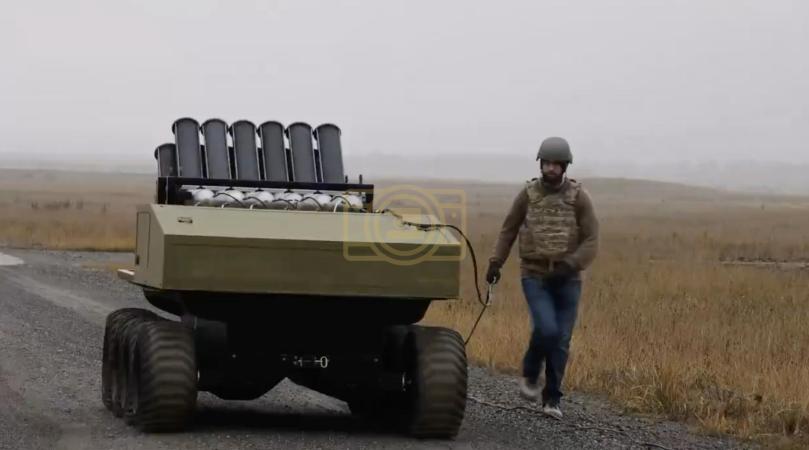
The U.S. Army has demonstrated a new approach to battlefield operations, unveiling an unmanned ground vehicle capable of deploying an 18-drone autonomous swarm from a standard shipping container during a live-fire exercise in Germany. The demonstration took place at Grafenwöhr Training Area and featured the R3NEGADE robotic platform, which emerged from the container before launching its drones through the HIV3 swarm system. Organized by the DEVCOM Armaments Center in cooperation with U.S. Army Europe and Africa and the 7th Army Training Command, the event was conducted under the Remote Rapid Response Autonomous Contingency Team, or R3ACT, effort. The exercise also showcased a second R3NEGADE equipped with remotely operated Javelin missiles, TRV-150 drones designed to deploy smoke, and first-person-view attack drones operated by soldiers from the 173rd Airborne Brigade. Another system, the TRV-400, carried the developmental FIR3FLY anti-armor payload, demonstrating how multiple unmanned platforms could support different battlefield missions.
The trial was designed to assess how modular, containerized robotic systems could be positioned in advance and rapidly deployed to support military operations. By combining autonomous drones, remotely operated weapons, and unmanned ground vehicles, the Army is exploring ways to deliver distributed strikes while reducing the direct exposure of soldiers to enemy fire. The demonstration also examined how these systems could help maintain logistics and operational flexibility in demanding conditions. The effort supports NATO’s Eastern Flank Deterrence Initiative and aligns with the Strike and Endurance elements of the Army’s October 2026 “How the Army Fights” framework. Although the demonstration does not establish that every system is ready for widespread operational deployment, it offers a look at how robotic platforms could become part of future military formations. The central question now is how reliably these containerized systems can operate together in real combat environments, where communications, electronic warfare, and battlefield conditions can complicate autonomous operations.