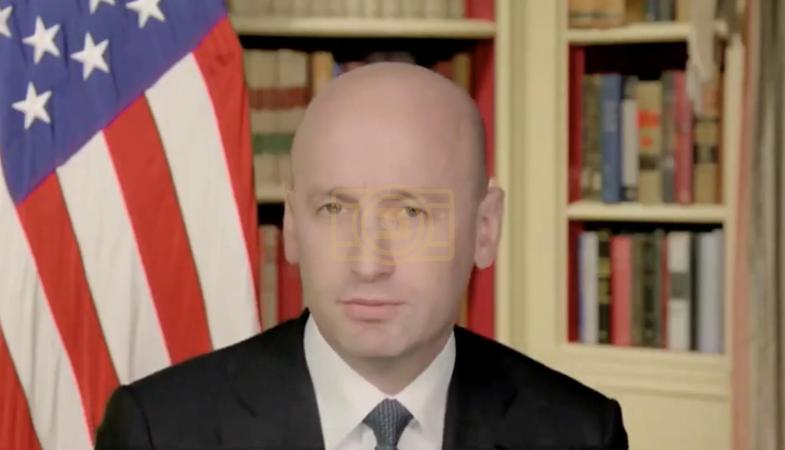
Stephen Miller Warns Against Anti-Voter ID Stance.

Gallery
Videos
Stephen Miller has sharply criticized Democratic opposition to the SAVE Act, arguing that rejecting documentary proof of citizenship and voter ID requirements effectively allows illegal voting to influence elections. Miller claims that such opposition represents an existential threat to American democracy, asserting that election security is paramount to preserving the integrity of the vote. His comments were delivered in a video clip intended to highlight the stakes of the legislative debate.
The SAVE Act, passed by the House of Representatives in February 2026, would require proof of U.S. citizenship for federal voter registration, aiming to tighten election security. The bill is currently under consideration by the Senate, where further debate is expected. Proponents like Miller argue that stricter documentation prevents voter fraud and ensures confidence in electoral outcomes, framing it as a safeguard for democracy.
Critics, including researchers from institutions like the Brennan Center for Justice, contend that instances of non-citizen voting are exceedingly rare, occurring in fewer than 0.0001% of ballots. They argue that measures such as the SAVE Act may disproportionately affect eligible voters and could suppress turnout among certain populations. The contrasting perspectives underscore the polarized nature of U.S. election security debates, pitting concerns over fraud against broader access to the ballot.
Miller’s statements have reignited national conversation about the balance between election security and voter access. His framing positions voter ID and citizenship verification not merely as administrative requirements, but as central to the survival of democratic norms in America. The debate continues to draw attention from policymakers, media outlets, and advocacy groups across the political spectrum.
As the Senate deliberates, the outcome of the SAVE Act vote may have significant implications for future elections. Proponents maintain that ensuring accurate voter rolls is critical, while opponents warn of potential disenfranchisement. The discussion reflects ongoing tensions over how best to safeguard both the integrity and inclusivity of the American electoral system.