DEPENDENCY WARNING: Carney Accuses US of Seeking to Break and Own Canada

Gallery
Videos
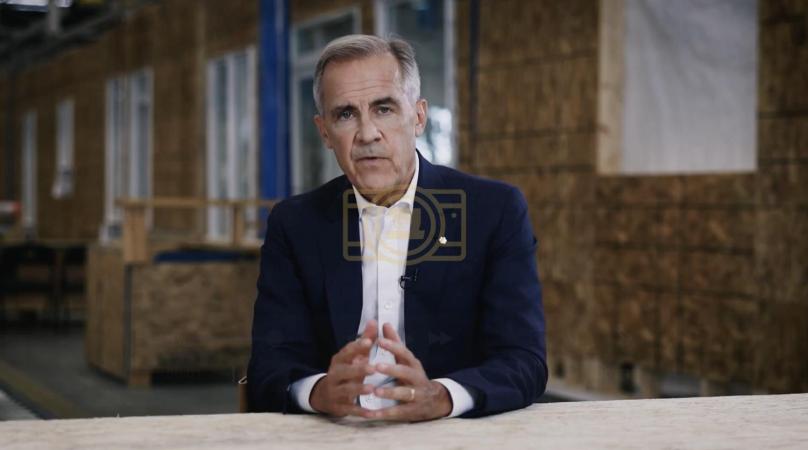
Canadian Prime Minister Mark Carney has accused the United States of seeking dependency rather than a genuine economic partnership during recent trade negotiations. In public remarks he repeated an earlier warning that America is trying to break Canada so it can own it. Carney said the cumulative U.S. demands revealed an intent to make Canada more reliant on its southern neighbor instead of fostering mutual benefit. He presented the Canadian decision to walk away from the talks as a defense of national sovereignty and key industries.
Trade negotiations between the two countries collapsed in late August 2026 after weeks of intensive discussions. According to Carney, last-minute American demands touched on Canada’s auto sector, steel production, cultural protections and arrangements involving third countries. He described the proposed terms as unfair and uneconomic and said they called into question the reliability of any agreement. Canadian negotiators were ordered to return to Ottawa, and formal talks were suspended.
In response to new U.S. tariffs affecting roughly $20 billion in Canadian exports, Canada announced dollar-for-dollar retaliatory measures. Those Canadian tariffs on selected American goods, including steel, dairy products and electronics, took effect in early September. Carney framed the retaliation as necessary to protect Canadian workers, companies and communities. He argued that Canada could not allow American products to enter freely while its own exporters faced high barriers.
The prime minister has used the “break us so they can own us” phrase on multiple occasions, including in the spring of the previous year and again after the talks failed. He has linked the warning to a broader strategy of reducing Canada’s economic dependence on the United States. Carney has pointed to efforts to attract new investment, strengthen domestic industry and diversify trade relationships as evidence that Canada is becoming more self-reliant. He has insisted that the country will never accept a subordinate position.
U.S. officials have portrayed their proposals as offering Canada favorable treatment relative to other trading partners. They have argued that Canadian reluctance to accept certain terms on industrial policy and market access prevented a deal. The breakdown has left both sides imposing significant tariffs and has introduced new uncertainty into one of the world’s largest bilateral trade relationships. Businesses on both sides of the border face higher costs and disrupted supply chains as a result.
Carney has left open the possibility of future negotiations while maintaining that any agreement must respect Canadian interests and sovereignty. His public language underscores a determination to resist what he views as pressure designed to increase Canadian dependence. The coming months will test whether the two governments can find a path back to the table or whether the current tariff measures become a longer-term feature of the relationship. For now, Carney’s message to Canadians is that the country will not be broken or owned.