FATAL COLLISION: Doctor-Pilot Dies After Plane Hits Hovering Helicopter
Gallery
Videos
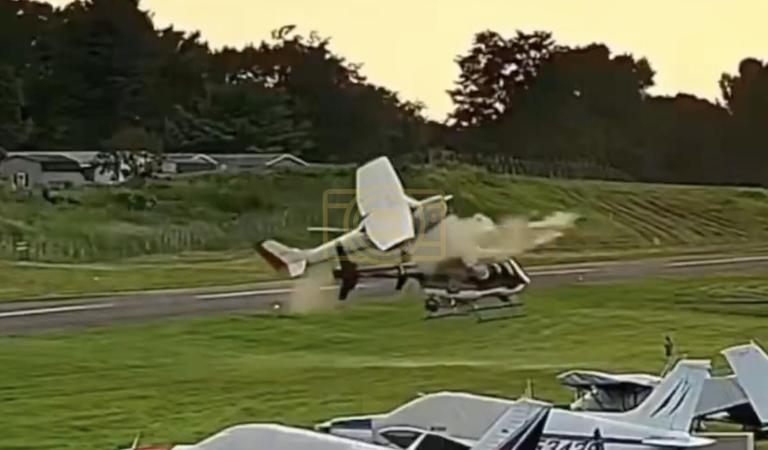
A routine evening at Carlisle Airport in Pennsylvania turned catastrophic on August 19, 2026, when a small Cessna 150 collided midair with a Pennsylvania State Police Bell 407 helicopter that was hovering just feet above the ground during a training exercise. According to investigators, the Cessna was attempting to land when it veered off the north side of the runway and struck the rear of the helicopter, which was performing what's known as a "hover taxi" beside the airstrip. The impact tore off the helicopter's main rotor blades, causing it to crash and roll onto its side, while the Cessna broke apart a short distance away. Acting Pennsylvania State Police Commissioner Lt. Col. George Bivens described the collision as "very violent," and Governor Josh Shapiro said the outcome could easily have been far worse for everyone involved.
The pilot of the Cessna, 57-year-old Dr. Paul Sokoloski of Hershey, Pennsylvania, was killed in the crash. Sokoloski was an emergency medicine physician at Penn State Health and a licensed pilot with single-engine, multiengine, and commercial ratings, according to FAA records, and had previously served with the Pennsylvania Air National Guard. The two troopers aboard the helicopter, Corporal Bryce Corman and Trooper Jason Mills, were seriously injured but survived; Corman reportedly pushed through a window to free himself and Mills after the crash. Both were airlifted to Penn State Health Milton S. Hershey Medical Center for treatment and are expected to recover.
Investigators with the National Transportation Safety Board said the Cessna appeared to be "out of control" in the moments before the collision. NTSB investigator Aaron McCarter explained that as the helicopter moved off to the side of the runway, the Cessna came in level, then suddenly pitched its nose up sharply before turning, leveling off, and flying directly into the back of the helicopter. Investigators have since recovered intact data cards from both aircraft, which they hope will shed further light on what happened in the final seconds before impact. A preliminary NTSB report found no evidence of pre-impact mechanical malfunctions or failures in either the Cessna or the helicopter that would have prevented normal operation.
The investigation remains ongoing, with officials still working to determine why Sokoloski was flying in that pattern, at that altitude, and in that manner before the crash. Security camera footage and photographs captured the collision and are being used to help reconstruct the sequence of events. While the mechanical integrity of both aircraft has been ruled out as a contributing factor, questions remain about pilot decision-making and the circumstances that led an experienced aviator to lose control just before landing. The NTSB's full investigation is expected to take additional time as analysts review the recovered data and finalize their findings.