FINAL STRETCH: Iran and Oman Near Deal to Reopen Hormuz Shipping Lane
Gallery
Videos
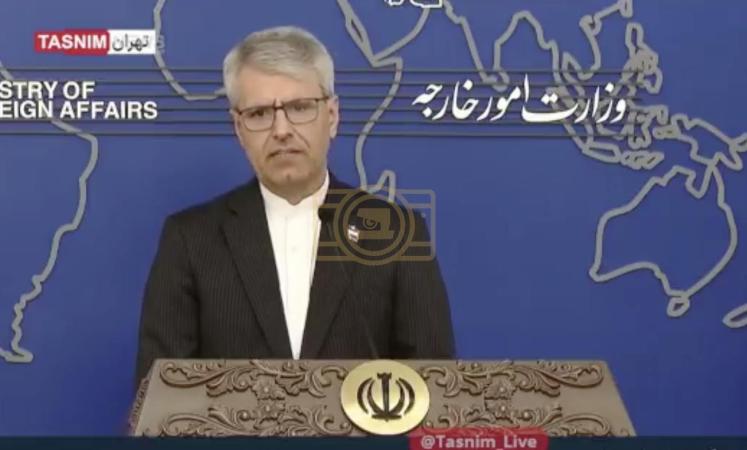
Iran's Foreign Ministry has signaled that months of tense negotiation over the fate of the Strait of Hormuz may finally be nearing a resolution. Spokesman Esmail Baghaei announced that Iran and Oman, as the two nations bordering the critical waterway, have been engaged in serious and advancing talks to establish safe shipping routes through the strait. According to Baghaei, those consultations have now reached their final stages, suggesting that an agreement long delayed by regional conflict and competing military pressures could be close at hand. The announcement offers a rare note of potential progress in a crisis that has choked one of the world's busiest energy corridors for months.
What makes this development particularly significant is the plan for how the agreement would be made official. Baghaei stated that once a final deal is reached, the joint Iran-Oman memorandum of understanding on establishing a temporary safe passage through Hormuz is expected to be formally registered with the International Maritime Organization within the coming days. Filing the agreement with the IMO, the United Nations body responsible for regulating international shipping, would give the arrangement a level of international legitimacy that Tehran has been eager to secure. It also signals that both countries want the deal recognized beyond their own borders, rather than treated as a purely bilateral understanding.
This announcement builds on weeks of steady, incremental progress between the two coastal states. Iranian and Omani officials have previously confirmed agreement on the geographical coordinates of a proposed shipping route, along with a broader framework covering technical, legal, security, and environmental considerations. Reports have also described the emerging plan as a middle corridor, blending elements of the northern route through Iranian waters and the southern route through Omani waters into a single two-way passage. Despite this progress, Iranian officials have been careful to note that the Iran-Oman arrangement alone cannot guarantee full safety of navigation as long as broader tensions, including the ongoing U.S. naval presence, remain unresolved.
The stakes attached to a successful agreement are enormous, given that the Strait of Hormuz has historically carried roughly a fifth of the world's oil and natural gas shipments during peacetime. Shipping traffic through the strait has been severely disrupted for months, and any credible move toward a formalized safe passage arrangement carries the potential to ease pressure on global energy markets. Still, with the agreement not yet finalized and larger geopolitical tensions still simmering in the background, how smoothly this corridor plan translates into actual restored shipping traffic remains to be seen. For now, Baghaei's announcement marks one of the clearest signals yet that Tehran and Muscat are working toward a concrete, internationally registered solution.