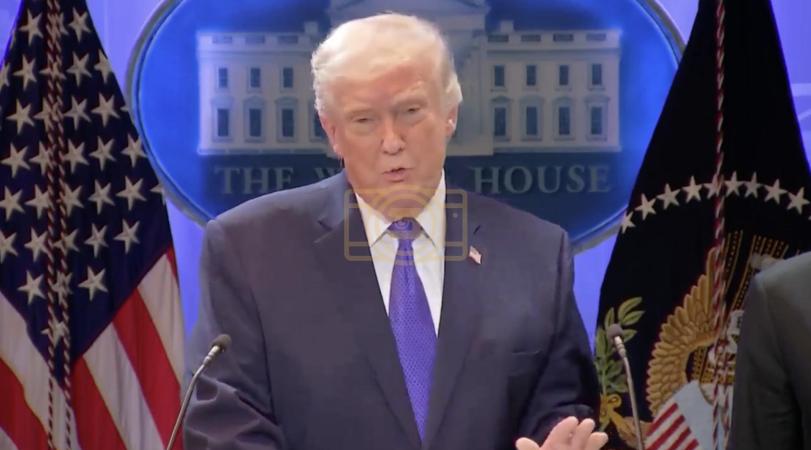
Trump Calls Supreme Court Tariff Opinion “Ridiculous"
Gallery
Videos
President Donald Trump sharply criticized the Supreme Court’s February 20, 2026, ruling that prohibits tariffs under the International Emergency Economic Powers Act (IEEPA), highlighting what he described as the law’s inconsistent application. In a public statement, Trump remarked, “To show you how ridiculous the opinion is, however, the Court said that... I can’t charge one dollar to any country under IEEPA... but I am allowed to cut off any and all trade or business with that same country,” underscoring what he views as a logical inconsistency in the Court’s decision.
The 6-3 ruling clarified that IEEPA does not grant the president authority to impose targeted tariffs, potentially obligating the administration to refund over $100 billion to importers affected by prior measures. Legal experts note that the decision places a significant constraint on Trump’s America First trade strategy, limiting executive powers while leaving broader embargo authority intact.
In response, the Trump administration moved to reimpose similar tariffs under Section 122 of the Trade Act, demonstrating a continuation of its trade agenda despite judicial limits. Supporters of the president argue that the Supreme Court ruling is inconsistent, undermines national sovereignty, and hampers the United States’ ability to leverage economic tools against unfair trade practices.
The episode highlights ongoing tensions between executive authority and judicial oversight in U.S. trade policy. While the Court’s decision curtails one form of presidential power, it has not deterred the administration from pursuing alternative measures designed to protect American industries, enforce fair trade standards, and maintain leverage in global economic negotiations.