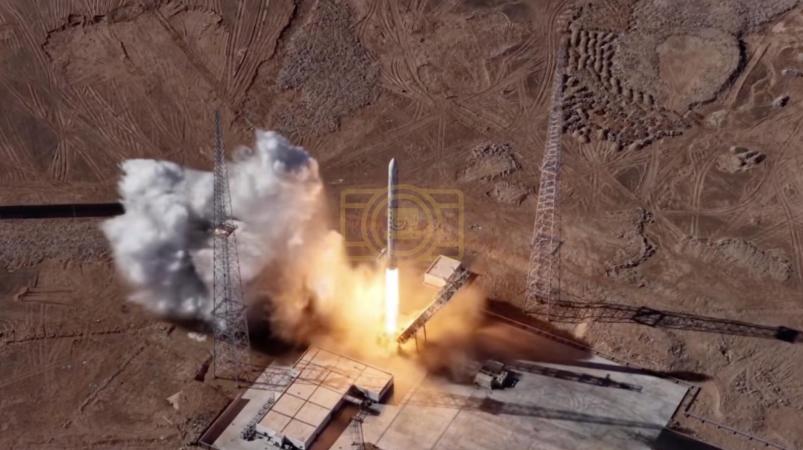
LIFTOFF SUCCESS: Private Chinese Firm Launches Massive New Rocket

Gallery
Videos
Chinese private space company Galactic Energy successfully launched its new Pallas-1 rocket for the first time on September 1, lifting off from the Jiuquan Satellite Launch Center at 10:00 a.m. Beijing time. The 52-meter rocket, powered by seven CQ-50 engines burning liquid oxygen and kerosene, generated roughly 350 tons of thrust to carry a liftoff mass of about 283 tons into orbit. This marked the debut of an entirely new class of vehicle for the company, moving it beyond the smaller solid-fuel rockets that built its early reputation. According to Chinese state media, the rocket performed normally throughout the flight and met all of its test objectives, with both stages separating as planned and the second stage completing the trip into its intended orbit.
Unlike some high-profile debut launches that end in dramatic failure, this flight appears to have gone about as smoothly as a first attempt can. The first stage, which was not equipped with recovery hardware for this mission, tumbled back toward Earth after separation as expected, since Galactic Energy chose not to attempt any landing or recovery on this initial flight. That decision reflects a common approach among rocket developers, who often prioritize confirming a new vehicle's basic performance before adding the complexity of trying to bring a booster back intact. Company officials described Pallas-1 as designed to give commercial satellite customers a more efficient and cost-effective way to reach orbit, positioning it as a workhorse for the growing satellite launch market.
The significance of this launch goes beyond a single successful flight. Pallas-1 represents Galactic Energy's move into the medium-to-large liquid-fueled rocket category, a segment that has become increasingly important as demand grows for launching large satellite constellations into low Earth orbit. Industry experts have pointed to this as a meaningful step for China's commercial space sector, since a privately developed rocket successfully reaching orbit on its first flight is no small technical achievement. The rocket is reportedly capable of carrying payloads up to seven tons to low Earth orbit, a capacity that puts it in a competitive position among the growing field of Chinese commercial launch providers.
This launch also fits into a much bigger picture of China's overall space activity this year, with Tuesday's flight counted among the more than 200 orbital launches conducted globally in 2026 alone. For Galactic Energy specifically, Pallas-1 marks the company's move toward reusable rocket technology, an area where cost savings and faster turnaround times have become the industry standard for staying competitive. While no recovery was attempted this time, the successful debut sets the stage for future flights where landing and reuse could be tested, following the same gradual, step-by-step approach that other rocket makers have used to prove out new reusable systems. If Galactic Energy continues building on this success, Pallas-1 could become a significant player in the increasingly crowded race to make commercial spaceflight faster and cheaper.