NIGHTTIME ALERT: Loudspeakers Warn Residents After a Strong Tremor Shakes Tokyo-Area Quake.
An earthquake rattled eastern Japan early Sunday, sending a powerful jolt through Tokyo and triggering emergency warning systems across the region. The Japan Meteorological Agency measured the quake at magnitude 5.9, while the U.S. Geological Survey initially placed it at 5.8; the epicenter was in southern Ibaraki Prefecture at a depth of about 70 kilometers. The shaking reached lower 5 on Japan’s seismic intensity scale in parts of Ibaraki and central Tokyo, making the overnight tremor widely felt.
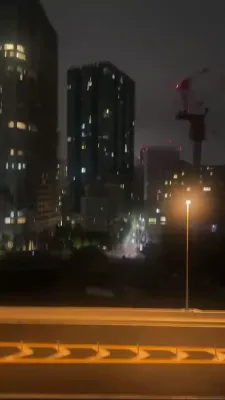
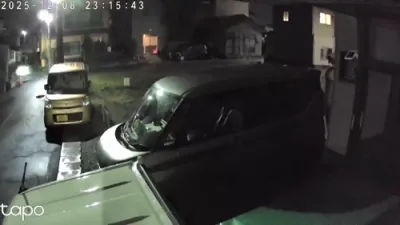
Nighttime footage captured the eerie atmosphere as warning announcements and emergency alerts sounded while the Japanese city remained illuminated by skyscrapers, highways and construction lights. Japan’s sophisticated earthquake-warning network is designed to rapidly alert residents when significant seismic activity is detected, giving people crucial time to protect themselves. Mobile emergency alerts were also activated after the quake, while authorities established an emergency task force to assess the situation.
Despite the strength of the shaking, authorities said there was no tsunami threat. At least five people were reported injured in Ibaraki, Chiba and Saitama, while transportation disruptions affected some local and express trains serving the Tokyo region. Officials also reported a burst underground water pipe in Tokyo and temporary power outages affecting hundreds of homes, although no abnormalities were reported at nuclear facilities.
The dramatic warnings heard in the footage are part of Japan’s broader disaster-preparedness system rather than evidence of a separate emergency. Japan experiences frequent earthquakes because of its location along the seismically active Pacific region, making rapid public notification and evacuation preparedness a routine part of life. The sudden announcements can sound unsettling in the middle of the night, but they are specifically intended to move residents from surprise toward immediate protective action.
The immediate focus is now on inspections, aftershocks and any additional damage that could emerge as authorities continue checking infrastructure. The earthquake demonstrated how quickly a moderate-to-strong tremor can be felt across one of the world’s largest metropolitan regions, even when the epicenter is dozens of kilometers away. For Tokyo and surrounding communities, the overnight shock was another reminder that Japan’s earthquake warning systems may be tested without notice—and that the next alert could come just as suddenly.