FOOD AS MEDICINE: RFK Jr. Praises Kentucky's New Doctor Training Push
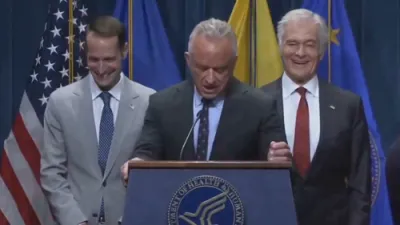
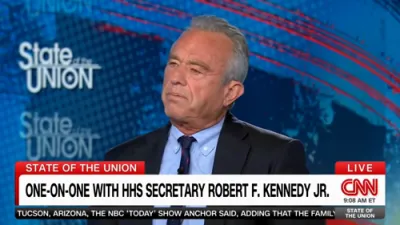
Health and Human Services Secretary Robert F. Kennedy Jr. announced that Kentucky's medical schools have committed to making nutrition education a required, core part of physician training, a move he says is critical to tackling the country's chronic disease crisis. Under the new commitment, the schools will provide at least 40 hours of nutrition instruction, or an equivalent level of competency, spread across all four years of medical school starting this fall. Kennedy made the announcement during a visit to the University of Kentucky, framing the shift as essential to producing doctors who understand how food directly impacts health outcomes. He argued that the country cannot make real progress against chronic illness if physicians graduate without a solid grasp of nutrition's role in disease and prevention.
The Kentucky commitment is part of a much larger nationwide initiative launched earlier this year by HHS in partnership with the U.S. Department of Education. More than 70 medical schools across roughly three dozen states have now pledged to adopt similar nutrition requirements, according to federal officials, building on an effort that began with just over 50 schools earlier this year and has continued to grow. The push stems from data showing just how thin nutrition education has historically been in medical training, with surveys showing that U.S. medical students have typically received only around 1.2 hours of formal nutrition instruction per year. Officials describe the new 40-hour standard as a dramatic increase meant to close that gap.
Beyond the schools themselves, several major medical accrediting and testing organizations have also signed on to support the change. The National Board of Medical Examiners has agreed that roughly 15 percent of the content across its licensing exam sequence will now assess nutrition knowledge and its clinical application, with the National Board of Osteopathic Medical Examiners making a similar commitment for osteopathic students. Federal officials have also pointed to complementary efforts, including a multimillion-dollar research challenge aimed at identifying scalable nutrition curriculum models that other schools could eventually adopt. Together, these moves are designed to embed nutrition into the broader architecture of how future doctors are trained and tested, rather than treating it as an optional add-on.
Supporters of the initiative say it represents rare common ground between the Trump administration's health priorities and mainstream medical organizations, with groups like the American Medical Association and the Association of American Medical Colleges involved in shaping the new curriculum standard. Officials have emphasized that the program remains voluntary, with the federal government providing guidance rather than mandating specific coursework, leaving individual schools free to implement the training in ways that fit their existing programs. Kennedy has framed the broader goal as shifting the health care system's focus toward prevention rather than what he describes as a cycle of ongoing prescriptions, arguing that better-trained physicians can help patients address the root causes of chronic disease rather than just managing its symptoms. With thousands of new doctors expected to graduate under the updated training model in the coming years, the long-term impact of the initiative on patient care and chronic disease rates remains to be seen.