WAITING FOR DISASTER: Rogoff Says Washington Won't Act Until It's Forced To
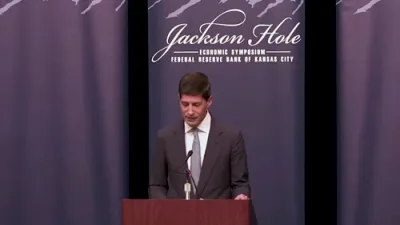
Harvard economist Kenneth Rogoff delivered a sobering assessment of America's fiscal trajectory during a Bloomberg Television interview with Tom Keene at the Jackson Hole Economic Symposium, arguing that meaningful action on the country's ballooning deficit is unlikely until voters are shocked into demanding change. Rogoff, the former chief economist at the International Monetary Fund, said bluntly that he doubts Washington will tackle the problem seriously until a genuine crisis forces the issue. His comments landed against the backdrop of U.S. national debt surpassing $40 trillion, with the federal deficit currently running at roughly 6 to 7 percent of GDP, even during a period without war or recession driving those numbers up.
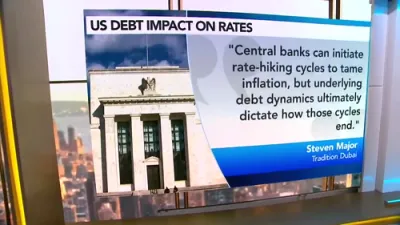
According to Rogoff, part of what allowed the debt to balloon unchecked for so long was what he described as a near-religious belief among academic economists that interest rates would keep falling indefinitely, reducing the urgency to address deficits. That assumption, he argued, has aged poorly, as rates bounced off their lows and climbed steadily higher, driven in part by the ongoing AI investment boom, geopolitical tensions, and rising global populism. Despite that shift, he noted that political leaders on both sides have failed to adjust accordingly, continuing to treat higher borrowing costs as a temporary anomaly rather than a lasting reality. He warned that no political coalition currently exists that appears willing or able to close the gap.
Rogoff was direct in predicting some kind of reckoning is coming, whether that takes the form of a debt crisis, financial repression, elevated inflation, or something more dramatic still. He noted that the United States wouldn't necessarily be alone in facing this kind of pressure, pointing to similar fiscal strain building in countries like the United Kingdom, France, and Belgium. When pressed on where the burden of any eventual adjustment might fall, Rogoff suggested that lower-income Americans have comparatively less to worry about, while higher earners should expect to shoulder a larger share through increased taxation, given that current U.S. tax rates remain relatively low compared to other developed nations. He also pointed to the country's unadjusted old-age benefit system as an area ripe for reform, given that life expectancy has continued rising without corresponding changes to retirement policy.
Beyond the numbers, Rogoff's broader warning centered on timing and resilience, cautioning that financial crises typically strike hardest when a country's ability to absorb shocks is already weakened. He suggested that continued political delay in addressing the deficit only raises the odds that when a reckoning does arrive, the available policy options will be more painful and less controlled than they would be if leaders acted proactively now. His remarks came the same day Federal Reserve Chairman Kevin Warsh delivered his own address at the symposium, with Rogoff separately noting that Warsh's hawkish tone on inflation could set up further tension between the Fed and the White House if a rate hike materializes in the months ahead. Taken together, Rogoff's comments painted a picture of a fiscal problem that policymakers largely understand but have so far lacked the political will to confront directly.