THE LONGEST WATCH: USS Lincoln Breaks Sea-Duty Record After Iran War
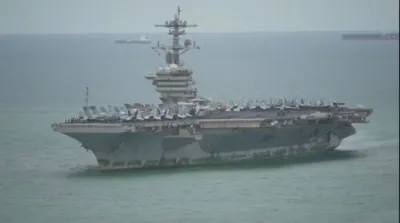
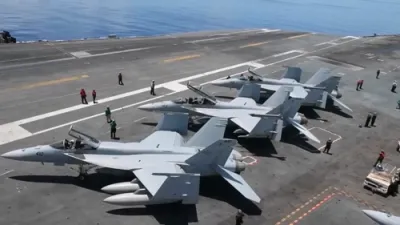
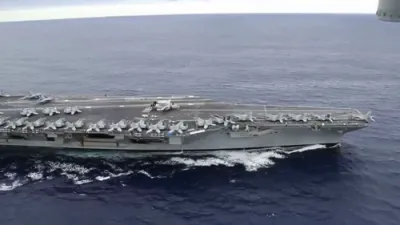
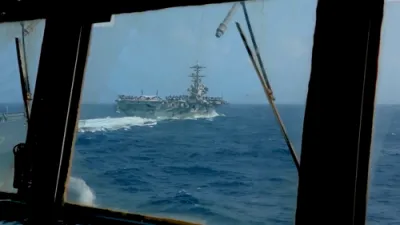
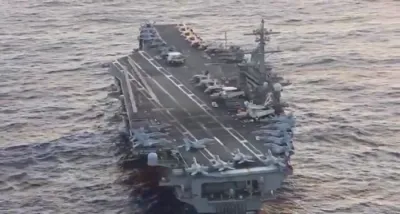
The USS Abraham Lincoln pulled into the port of Laem Chabang, Thailand, on Wednesday, September 2, marking the end of an extraordinary 286 consecutive days at sea, a modern-day record for a U.S. Navy aircraft carrier. The nuclear-powered warship, its hull visibly streaked with rust and worn paint from nearly nine straight months without a full port call, arrived carrying roughly five thousand sailors and Marines who have spent the better part of a year supporting combat operations against Iran. Rear Adm. Robert E. Loughran, commander of Carrier Strike Group 3, called the stop a well-deserved chance for the crew to rest and recharge, while also framing it as a demonstration of the long-standing alliance between the United States and Thailand. According to U.S. Sen. Richard Blumenthal, the deployment now stands as a modern-day record for consecutive days at sea during combat and blockade duty, a distinction that speaks to just how demanding this deployment has been.
The Lincoln didn't arrive alone. It was joined by the guided-missile destroyer USS Frank E. Petersen Jr., which docked nearby in Sriracha, and the guided-missile cruiser USS Robert Smalls, which pulled into Map Ta Phut in neighboring Rayong province. Together, the strike group had spent months enforcing a naval blockade and conducting combat operations in the Middle East as part of the broader U.S.-Iran conflict, a mission that kept the ships continuously at sea far longer than is typical even for wartime deployments. The USS George Washington has since relieved the Lincoln in the Middle East, freeing the carrier to finally make its way toward the Indo-Pacific and, eventually, back home to San Diego later this year, where it will close out one of the longest deployments in modern U.S. Navy history.
For the sailors and Marines aboard, the arrival in Thailand carries real emotional weight beyond the historical footnote. Laem Chabang sits close to Pattaya, a coastal city that has served as a go-to rest-and-relaxation destination for American service members since the Vietnam War era, when it hosted crews taking a break from the pressures of that conflict. Local officials have arranged buses to ferry personnel between the ship and the city for the duration of the five-day port call, and many crew members have reportedly already booked hotel rooms in anticipation of their first extended shore leave in nearly nine months. Pattaya's mayor and local business owners have welcomed the visit enthusiastically, with some putting up banners and stepping up preparations to accommodate the sudden influx of visitors.
The economic impact for the region is expected to be significant, particularly given how much local tourism has suffered amid broader travel disruptions and rising fuel costs stemming from the Middle East conflict. Officials in Pattaya estimate the port visit could inject roughly three million dollars into the local economy over just a few days, a welcome boost for businesses that rely heavily on visiting military personnel and international tourists alike. Thai authorities have also increased security around the area, adding police patrols and checkpoints along routes leading into the city. Beyond the immediate economic and morale benefits, the sheer length of the Lincoln's deployment has drawn renewed attention in Washington to the toll extended combat deployments take on crew welfare, a conversation likely to continue even as the ship and its exhausted crew finally get the rest they've earned.