LOYALTY TESTED: Milei Breaks From Ally to Challenge Falklands Oil Grab
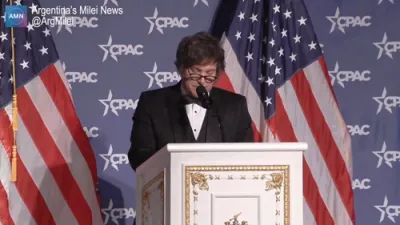
Javier Milei has built his presidency around an unshakable alliance with Israel, but that loyalty didn't stop him from taking aim at an oil project largely owned by an Israeli company. The Argentine president said the United Nations has spent fifty years asking Argentina and the United Kingdom not to take unilateral action, including resource exploitation, on the disputed Falklands, or Malvinas, while the sovereignty dispute remains unresolved. According to Milei, the United Kingdom has systematically ignored that call, and he pointed directly at the Sea Lion project as proof. The project is operated by Navitas Petroleum, an Israeli company listed in Tel Aviv that holds a 65 percent stake, alongside British firm Rockhopper Exploration, which owns the remaining 35 percent.
Milei's warning wasn't vague or symbolic; he laid out a specific timeline and a specific threat. He said Argentina has determined that Sea Lion has a set date to begin offshore oil extraction within the next few months, and that failing to act now, with firmness and speed, would let the operators gain the material capacity to draw from oil reserves that Argentina considers its own. That, he argued, would mark something that has never happened before: foreign companies physically extracting resources from waters Argentina claims as its territory. He went further, warning that allowing this to happen would only encourage the British government to deepen its occupation of the islands and its exploitation of the surrounding resources.
The project itself is enormous by South Atlantic standards. Sea Lion is estimated to hold gross recoverable resources of roughly 917 million barrels of oil, making it the largest deepwater oil development in the South Atlantic outside of Brazil, and larger than any project in the North Sea. Rockhopper and Navitas confirmed their final investment decision for Phase 1 late last year, with first oil currently planned for sometime around 2028, though some reports point to production potentially starting as early as late 2027. The companies have pushed back firmly against Milei's rhetoric, stating that their partnership operates under valid petroleum licenses lawfully granted by the Falkland Islands government, a self-governing UK Overseas Territory, and with the full backing of the British government.
What makes Milei's stance notable isn't just the substance of it, but who it puts him at odds with. He has spent much of his presidency publicly embracing Israel and its leadership, yet he didn't hesitate to call an Israeli-majority-owned project a raid on Argentine waters when Falklands sovereignty was on the line. That distinction sends a clear signal: for Milei, the Malvinas dispute sits in a category of its own, separate from Argentina's broader foreign alliances, no matter how close those relationships otherwise are. Whether this rhetoric translates into concrete Argentine action, diplomatic, legal, or otherwise, remains the open question hanging over the Sea Lion project as its development timeline continues to move forward.