HORMUZ SHOWDOWN: Iran Says It Nabbed a US Military Underwater Robot
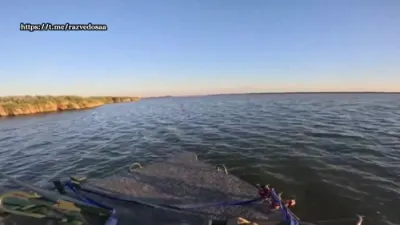
Iran's Islamic Revolutionary Guard Corps says it has pulled off a major intelligence coup in one of the world's most contested waterways, claiming to have captured an advanced American underwater drone near the entrance to the Strait of Hormuz. Iranian state television broadcast footage of the seizure, with the IRGC Navy describing the operation as a complex intelligence and operational action carried out in the early hours of Tuesday. Iranian media identified the captured system as an Anduril Dive-LD, a large autonomous underwater vehicle built by the American defense technology firm Anduril Industries. The IRGC says the vessel is now in its possession and has promised to release additional images and video in the hours following the initial announcement.
The footage itself lends some credibility to Tehran's claims, even without independent confirmation. Naval analysts examining the released images noted that the drone closely matches the Dive-LD's known design, right down to distinctive details like flood holes, a transparent forward sail, and X-shaped rudders. The Dive-LD is a substantial piece of hardware, measuring roughly 5.8 meters long and weighing close to three metric tons, built for missions that can stretch up to ten days underwater and dive to depths of about 6,000 meters. Anduril delivered the first unit of this type to the US Navy's Unmanned Undersea Vehicle Squadron in the spring of 2025, meaning the technology is still relatively new to the fleet. If genuine, this would mark one of the first known losses of this specific platform to a foreign adversary.
The capture, if verified, would hand Iran a valuable piece of American military technology to study, and possibly to copy. The Dive-LD's modular design allows it to be configured for a range of missions, including intelligence gathering, seabed mapping, infrastructure inspection, and mine-countermeasure operations, making it a genuinely sensitive asset to lose. Some reports suggest Iran may attempt to reverse-engineer the system, while others raise the possibility that any recovered technology could eventually be shared with allies such as Russia or China. Notably, one report indicated the vehicle may have been affected by a malfunction in the days before its reported capture, rather than being intercepted mid-mission. As of now, the US military has not issued any official confirmation of the drone's loss or capture, leaving key details of exactly how it ended up in Iranian hands still unclear.
This incident isn't happening in a vacuum. It comes amid a sharp and ongoing escalation between the United States and Iran centered on the Strait of Hormuz, a narrow but critical passage that much of the world's oil shipping depends on. Recent weeks have reportedly included US strikes on Iranian oil tankers, an Iranian missile attack targeting US naval forces, and the downing of an American MQ-1 drone over the strait. Against that backdrop, the claimed capture of a Navy underwater drone reads less like an isolated incident and more like the latest flashpoint in a rapidly intensifying standoff, one where control over the seabed itself is quickly becoming as contested as the surface waters above it.