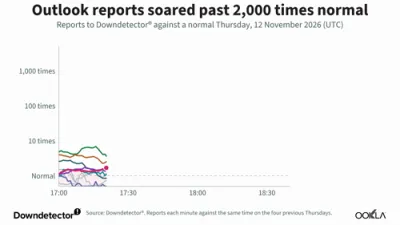
DAY-LONG DIGITAL BLACKOUT: Microsoft Restores Outlook And Teams After Global Outage Hits 74 Countries
Microsoft is finally bringing Outlook, Teams and other services back online after a massive worldwide outage that began around 1 p.m. ET on Thursday, November 12, and dragged into Friday. The disruption spread across 74 countries within about an hour and knocked out Outlook, parts of Teams and Copilot, leaving governments, schools and businesses scrambling without email. Early fixes did not fully work, and at one point servers that had been restored became unresponsive again. By Friday morning, Microsoft said it was seeing continued recovery progress, with broader improvements in North America and across much of Europe. Some users may still run into intermittent problems as traffic is gradually restored.
So what went wrong? Microsoft says a number of its servers unexpectedly became unavailable, creating elevated load and connectivity problems, and that the load was not caused by a surge in traffic. The company has also said there is no indication of a cyberattack or other malicious activity, although the full root cause is still being investigated. The outage hit organizations that run on Microsoft 365, which is used by hundreds of millions of people, and even some government offices warned the public to expect delayed email replies. That raises an uncomfortable question about what happens when so many people depend on one provider and it goes down.