An American Legend Reborn Underwater: Historic SS United States Sunk Off Florida to Become World's Largest Artificial Reef
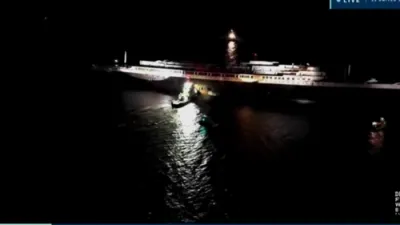
The legendary SS United States, one of the most celebrated ocean liners in American maritime history, has completed its final voyage after being deliberately sunk off the coast of Florida on November 11, 2026, to create what is expected to become the world's largest artificial reef. Measuring approximately 990 feet long, the historic vessel is larger than the Titanic and holds an extraordinary place in maritime history for setting an unbroken transatlantic speed record during its maiden voyage in 1952. After more than 800 transatlantic crossings and decades of service, the ship was retired in 1969 and spent years docked in Philadelphia while preservation efforts struggled to find a permanent future for the vessel. Okaloosa County eventually acquired the ocean liner for approximately $1 million in 2024, launching an ambitious $13.5 million project to transform the historic ship into an underwater marine habitat and recreational destination. Following more than a year of preparation in Mobile, Alabama, crews carried out a carefully controlled sinking operation using seawater flooding rather than explosives. The enormous vessel finally disappeared beneath the Gulf of Mexico after several hours, approximately 22 nautical miles southwest of Destin, Florida, where it now rests at a depth of roughly 180 feet.
The transformation represents a new chapter for a vessel once regarded as a masterpiece of American engineering and a symbol of the country's postwar maritime ambitions. During its operating years, the SS United States transported more than a million passengers, including American presidents, celebrities, and other prominent international figures, while its record-breaking speed made it one of the fastest ocean liners ever built. Before its final descent, specialized crews removed environmentally hazardous materials, prepared openings throughout the structure, and modified the hull to ensure a controlled landing on the seabed. The resulting artificial reef is expected to attract marine wildlife, provide new underwater habitat, and create a major destination for scuba divers, anglers, and marine enthusiasts. Local officials also anticipate substantial tourism benefits for Florida's Emerald Coast, with the project expected to generate additional business for diving operators, fishing charters, hotels, and surrounding communities. Rather than ending up as scrap metal, the historic ocean liner will now serve an entirely different purpose beneath the waves, preserving its legacy while contributing to the Gulf's marine ecosystem.