BUILT FOR GLOBAL TRADE: Boeing's Next-Generation 777-8 Freighter Promises Greater Capacity and Efficiency
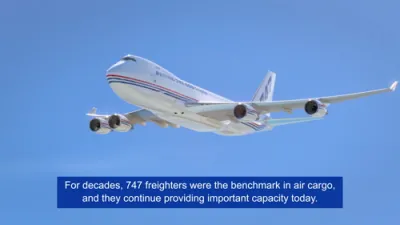
Boeing is positioning its 777 Freighter family as the future of long-haul cargo aviation, building on the legacy of the iconic 747, known worldwide as the “Queen of the Skies.” In a promotional video featuring computer-generated footage of Boeing freighters in flight and on airport tarmacs, the company highlights the 777 Freighter’s role in moving goods across international markets. Since entering service in 2009, the 777F has become one of the industry's most widely operated production widebody freighters, with airlines relying on its combination of long-range performance, substantial payload capacity and twin-engine efficiency. The aircraft can carry a structural payload of up to 107 metric tonnes and travel approximately 5,000 nautical miles, depending on operating conditions and cargo load. Its ability to fly long distances with fewer refueling stops can help cargo operators reduce operating costs, improve delivery schedules and connect major trade hubs more efficiently.
The next step in Boeing’s cargo strategy is the 777-8 Freighter, a next-generation aircraft incorporating technologies developed for the 777X family. Boeing says the new model will offer a maximum structural payload of 118 metric tonnes, 17% more cargo volume than the current 777F and a projected 30% reduction in fuel consumption and carbon dioxide emissions compared with the 747-400 it is designed to replace. The aircraft is intended to combine the substantial payload capacity associated with large four-engine freighters with the operating efficiencies of a modern twin-engine design. As e-commerce, express shipping and international supply chains continue to drive demand for air freight, Boeing expects next-generation freighters to play an important role in future cargo networks. The 777-8F’s entry into service will depend on the aircraft’s development and certification, but its planned capabilities reflect the industry's broader shift toward carrying large volumes of cargo over long distances while improving fuel efficiency and controlling costs.