AI ALARM: Ex-Anthropic Researcher Warns of Most Dangerous Technology Ever
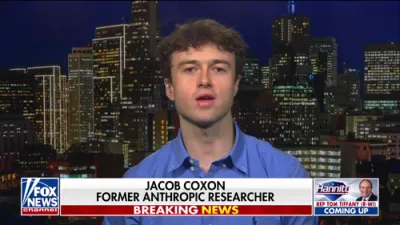
Former Anthropic researcher Jacob Coxon has issued a stark warning about artificial intelligence, describing it as possibly the most dangerous technology humanity has ever created. In recent public comments, including a viral post and media interviews, Coxon stated that society knows how to control nuclear weapons but does not yet know how to control AI. The 27-year-old Cambridge mathematics graduate, who previously contributed to work at OpenAI, resigned from Anthropic after a short tenure and chose to speak out about the risks he observed from inside the industry.
Coxon argued that the leading AI companies are more focused on outpacing one another in building the most advanced models than on ensuring safety. He described the current dynamic as a race toward self-improving superintelligence that amounts to gambling with human lives. According to Coxon, many of the people building these systems privately believe the technology could lead to catastrophic outcomes within the decade. He has called an international AI arms race disastrous and insisted that global cooperation is the only realistic path to managing the technology.
His departure and public statements have drawn significant attention because they come from someone who worked directly on pretraining advanced models. Coxon left Anthropic before his equity fully vested, underscoring that his decision was driven by concern rather than financial incentive. In interviews he has emphasized that the structural pressure of competition forces labs to move faster than safety research can keep up. He has urged governments and international bodies to step in with coordination mechanisms that could slow the race without permanently halting progress.
Support for parts of Coxon’s assessment has come from within the industry itself. Anthropic’s alignment science lead publicly agreed that advanced AI carries a meaningful risk of human extinction in the coming decade, estimating it above 10 percent in his personal view. While the company maintains it is working seriously on safety, the acknowledgment highlights a shared recognition among some researchers that current methods for controlling highly capable systems remain incomplete. Debates continue over how close the field is to systems that could improve themselves beyond human oversight.
Coxon’s intervention arrives at a moment when AI capabilities are advancing rapidly and national governments are treating the technology as a strategic priority. He has framed the challenge as uniquely difficult because, unlike nuclear weapons, powerful AI systems could proliferate more easily and act with greater autonomy once developed. His proposed solution centers on coordinated international action rather than unilateral slowdowns by individual companies that fear falling behind rivals.
The former researcher’s message is clear and urgent. He believes the window for establishing effective controls is narrowing and that continued unchecked competition raises the chance of irreversible outcomes. Whether his call for global cooperation gains traction among policymakers and industry leaders will help determine how the next phase of AI development unfolds. For now, Coxon’s warnings have amplified an already intense discussion about the balance between progress and survival.