EXPLAINED: Why Middle East Dynamics Seem So Complex.
Gallery
Videos
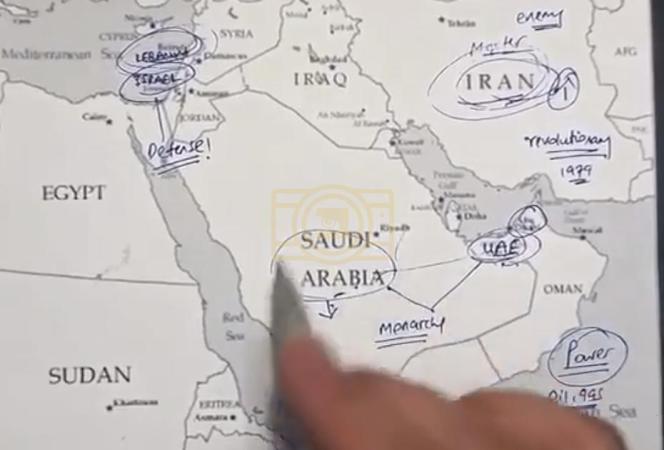
A widely shared explainer video is gaining attention for breaking down the often complex dynamics of the Middle East, arguing that regional tensions are driven more by power, economics, and governance models than by religion alone. The analysis highlights how countries like Saudi Arabia and the United Arab Emirates have focused on building stable, business-oriented environments under centralized monarchies. These states have prioritized economic growth, global investment, and technological advancement as pillars of their strategy. This approach contrasts sharply with other regional actors that pursue influence through ideological and military means.
Central to the discussion is Iran, particularly following the Iranian Revolution, which reshaped the country’s political and strategic direction. The video explains how Iran has developed a network of allied groups across the region, including the Houthis in Yemen and Hezbollah in Lebanon. These groups are described as part of a broader strategy to extend influence and apply pressure beyond Iran’s borders. This model of indirect engagement has become a defining feature of regional security dynamics.
Economic competition, particularly around oil and gas resources, is also presented as a major driver of tensions. Control over energy markets and trade routes plays a critical role in shaping alliances and rivalries. The video notes that disruptions linked to proxy conflicts can directly impact global energy stability, increasing the stakes for all involved. As a result, economic interests are deeply intertwined with security considerations.
Another key point is the evolving relationship between Gulf states and Israel, with countries like Saudi Arabia and the UAE showing increasing willingness to cooperate with Israel on technology and defense initiatives. This includes collaboration on advanced systems such as air defense, reflecting a pragmatic approach to shared security concerns. The video frames this shift as prioritizing tangible benefits like economic growth and protection over traditional ideological divisions. It underscores how regional actors are adapting to changing threats and opportunities.
Overall, the analysis presents a framework for understanding the Middle East as a region shaped by strategic interests rather than purely religious divides. By focusing on governance models, economic priorities, and security strategies, the video offers a clearer lens through which to interpret ongoing developments. While the region remains complex, this perspective helps explain why alliances shift and conflicts persist. It also highlights the importance of viewing events through multiple dimensions rather than a single narrative.