BUILDING BACK MUSCLE: Rubio Unveils Plan to Train 3.8 Million Workers
Gallery
Videos
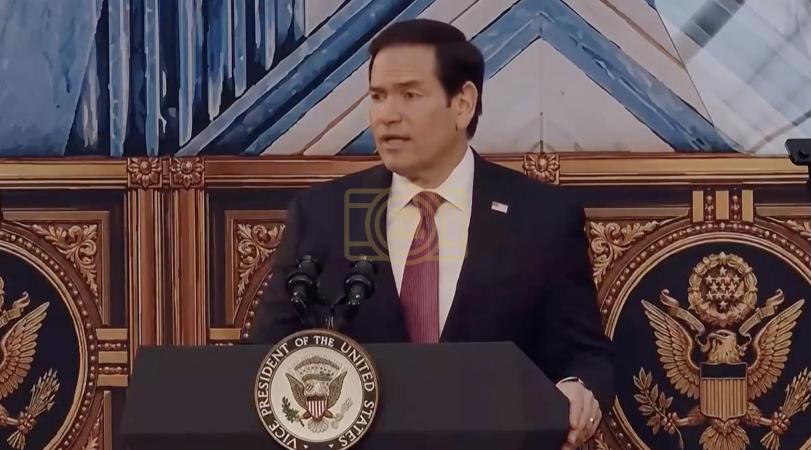
Secretary of State Marco Rubio delivered a pointed critique of American economic policy this week, arguing that the country made a costly miscalculation decades ago by deciding manufacturing no longer mattered. "We made a terrible mistake in this country, many years ago, under people that were in charge at the time, especially at the end of the Cold War, and that was the idea that the ability to make things no longer mattered," Rubio said. He framed the comment as part of a broader reckoning the administration is now undertaking, describing an "endeavor across the board" aimed at reversing that shift and rebuilding the country's industrial base. The remarks tie directly into a new federal initiative launched the same day, positioning Rubio's critique of the past as the justification for a very concrete plan for the future.
That plan is called Foundry School, a national workforce development program officially launched by the Trump administration on September 3 with Vice President JD Vance headlining the event. Built as a project under the State Department's broader Pax Silica initiative, Foundry School centers on a partnership with Stanford University, which developed a first-of-its-kind advanced manufacturing curriculum specifically for American students. Seven additional universities, Arizona State, Georgia Tech, Ohio State, Penn State, the University of Cincinnati, the University of Kansas, and Vanderbilt, are contributing keystone lectures, and the program will run 17 sessions across all eight campuses. Instruction will come directly from founders and chief executives in the advanced manufacturing sector, drawing not only from American companies but from firms based in Pax Silica partner nations including South Korea, Japan, Taiwan, and India.
The urgency behind the program is rooted in a stark workforce projection. Federal estimates suggest the United States will need approximately 3.8 million additional skilled workers by 2033 to fill roles across semiconductors, defense, energy, and related advanced industries. Officials have framed Foundry School as the mechanism for converting years of industrial investment into an actual functioning workforce, arguing that trillions of dollars in reindustrialization spending mean little without enough trained people to staff the resulting factories and facilities. The program was first previewed back in June at the second Pax Silica Summit, where Under Secretary Jacob Helberg introduced it as a multinational effort to secure supply chains for the technologies expected to define the next several decades.
Taken together, Rubio's remarks and the Foundry School launch reflect a broader ideological shift the administration is trying to codify into policy: a rejection of the post-Cold War consensus that treated manufacturing as a relic of a bygone economic era. Whether the program can meaningfully close a workforce gap measured in the millions remains an open question, particularly given the scale of retraining and educational infrastructure that figure implies. Still, the pairing of a philosophical critique from the nation's top diplomat with a concrete, university-backed training pipeline signals that the administration views reindustrialization not just as a manufacturing challenge, but as a workforce and educational one that will take years, if not decades, to fully address.