PRECISION AND PUNCHLINES: CENTCOM Sinks Tanker, Roasts Iran's Navy
Gallery
Videos
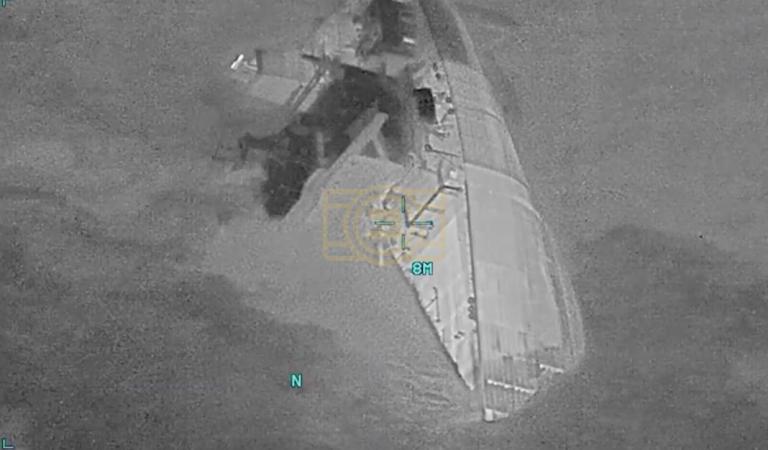
CENTCOM didn't just announce the destruction of an Iranian oil tanker this week, it delivered the news with a pointed jab clearly aimed at wounding more than just the vessel itself. "Thanks to the precision and professionalism of American service members, the M/T Kylo sank in the Gulf of Oman today and joined Iran's navy at the bottom of the sea," the command's official statement read, a line that doubled as both a battle update and a not-so-subtle dig at the state of Iran's naval capabilities. The remark accompanied video footage released by CENTCOM showing the strike itself, precision hits followed by explosions and thick smoke as the tanker, also known as the Noxen, was reduced to a burning wreck before slipping beneath the waves.
The Kylo's destruction was one of three coordinated strikes carried out against Iranian tankers, a direct response to an Iranian missile attack that had targeted a U.S. aircraft carrier and a guided-missile destroyer operating in the region. Both American vessels successfully evaded the incoming ballistic missiles, and CENTCOM confirmed there were no U.S. casualties from the attempted strike, a fact that made Washington's retaliatory response feel less like defensive necessity and more like a calculated show of dominance. According to CENTCOM, the Kylo was unladen at the time of the strike and its crew had already been ordered to abandon ship, allowing the vessel to be struck in multiple critical locations and fully destroyed without risking casualties among its crew.
Beyond the tactical details, the framing of CENTCOM's announcement reveals something about the broader strategy at play. By explicitly tying the tanker's sinking to Iran's naval standing, U.S. officials appeared to be sending a message that extends beyond simple retaliation, suggesting that Iran's ability to project power at sea, and to protect the economic assets that fund its military and proxy networks, is fundamentally limited. CENTCOM has been direct about the economic motivation behind these strikes, describing the targeted tankers as part of a multibillion-dollar shadow fleet that channels oil revenue directly to the IRGC and its regional allies, and stating plainly that Iran currently lacks meaningful defenses to protect that fleet from further U.S. action.
The rhetorical flourish in CENTCOM's statement fits a broader pattern that has emerged from Adm. Brad Cooper, the command's leader, who has repeatedly used blunt, almost taunting language throughout this latest round of escalation, previously warning the IRGC that any attack on U.S. ships would result in Iran losing three vessels for every two it targets. Whether intended primarily as a warning to Tehran or as a morale-boosting message for American forces and the domestic audience back home, the "joined Iran's navy at the bottom of the sea" line is unlikely to go unnoticed in Tehran, where officials have already signaled that further escalation remains firmly on the table. With tensions in the Gulf showing no signs of cooling, this kind of pointed messaging suggests both sides may be settling in for a prolonged and increasingly personal contest over who controls the narrative, and the waters, of this ongoing confrontation.