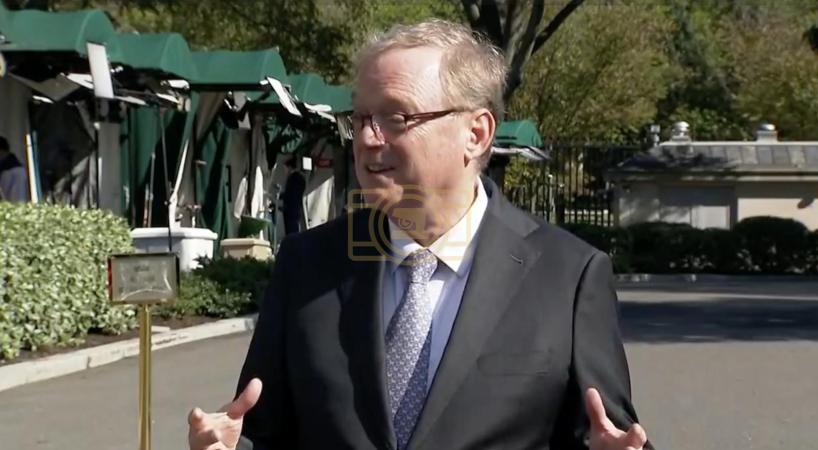
HASSETT'S BALANCING ACT: White House Praises Fed Independence After Jobs Surge
Gallery
Videos
White House National Economic Council Director Kevin Hassett struck a notably measured tone this week while reacting to a stronger-than-expected August jobs report, one that added a fresh layer of complexity to the ongoing tension between the Trump administration and the Federal Reserve. The data showed nonfarm payrolls climbing by 162,000, dramatically outpacing economists' expectations of roughly 55,000, while the unemployment rate held steady at 4.1 percent. Hassett also pointed to upward revisions in prior months' figures, framing the overall report as evidence of a labor market that remains far more resilient than many forecasters had assumed heading into the fall. It was a notably upbeat readout from an administration official, delivered at a moment when the broader debate over interest rates has grown increasingly heated.
What stood out most in Hassett's remarks, however, wasn't just the jobs numbers themselves but his explicit emphasis on the Federal Reserve's independence. Even as strong hiring data typically weakens the case for rate cuts, Hassett made a point of stating that the Trump administration respects the central bank's autonomy to make its own decisions, a notably restrained position given the pressure campaign the White House has waged against the Fed in recent days. That contrast, a robust jobs report paired with a public nod to Fed independence, offered a more conciliatory counterpoint to the sharper rhetoric coming from elsewhere in the administration, including President Trump's own threats to cut off trade with countries running surpluses against the U.S. unless the Fed lowers rates.
Digging into the report's details, the job gains were spread across several sectors that have shown consistent strength throughout the year. Leisure and hospitality, manufacturing, and local government education all posted solid gains in August, suggesting the labor market's resilience isn't confined to any single industry but reflects broader momentum across the economy. That breadth matters for how Fed officials interpret the data heading into their September 15 policy meeting, since a narrow, one-sector hiring spike would carry far less weight than gains distributed across multiple parts of the economy. For an administration pushing hard for lower rates, the diversity of the job gains complicates the argument that the economy needs additional stimulus in the form of cheaper borrowing costs.
Taken together, Hassett's comments capture the awkward position the White House finds itself in as the Fed's meeting approaches. On one hand, the administration wants to celebrate a labor market that continues to outperform expectations, a genuine political win. On the other, that same strength undercuts the urgency behind Trump's calls for immediate rate cuts, since central bankers typically view robust job growth as a sign the economy doesn't need extra support. By publicly affirming the Fed's independence even while strong data works against the administration's preferred policy outcome, Hassett appeared to be threading a careful needle, acknowledging the numbers without abandoning the broader argument that rates should still come down.