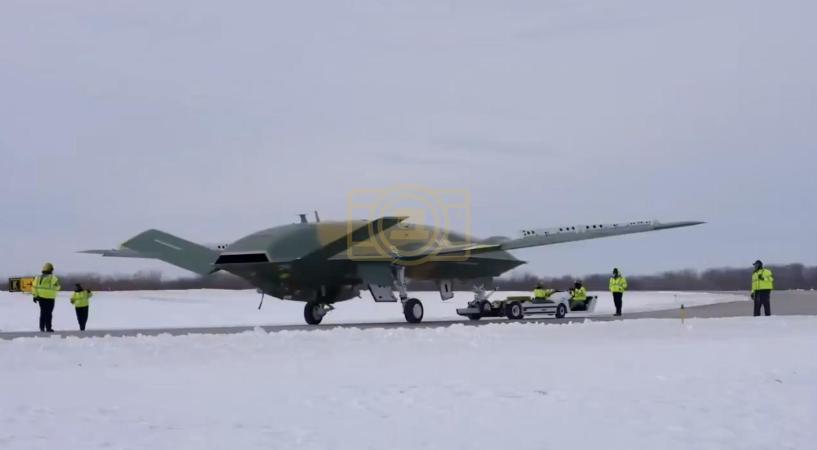
Boeing's Unmanned Refueling Drone Completes First Autonomous Taxi Test.
Gallery
Videos
Boeing Defense has reported that the first operational MQ-25A Stingray completed its initial autonomous taxi test on January 30, 2026, marking a key milestone in the development of the U.S. Navy’s carrier-based unmanned aerial refueling program. The drone is designed to offload mid-air refueling duties from manned aircraft, such as the F/A-18, and extend the operational range of F-35C jets by up to 500 nautical miles.
The autonomous taxi test allows the MQ-25A to navigate crowded carrier flight decks safely and efficiently without pilot input, a crucial capability for reducing the risk of accidents and speeding up deck operations. The milestone represents a significant step toward the Stingray’s first scheduled flight in early 2026.
Developed under a 2018 Navy contract valued at up to $805 million, the MQ-25A Stingray enhances naval aviation by reducing pilot workload in high-threat environments and enabling manned fighters to focus on combat missions rather than refueling. Boeing’s ongoing testing program is intended to validate both autonomous ground operations and in-flight refueling capabilities, paving the way for integration across the carrier air wing.
The MQ-25A program demonstrates a major evolution in naval operations, combining unmanned technology with traditional carrier-based aviation to increase operational efficiency, mission flexibility, and fleet readiness.