FROM THE PEAK: Netanyahu Vows to Topple Iran's Regime from Mt. Hermon
Gallery
Videos
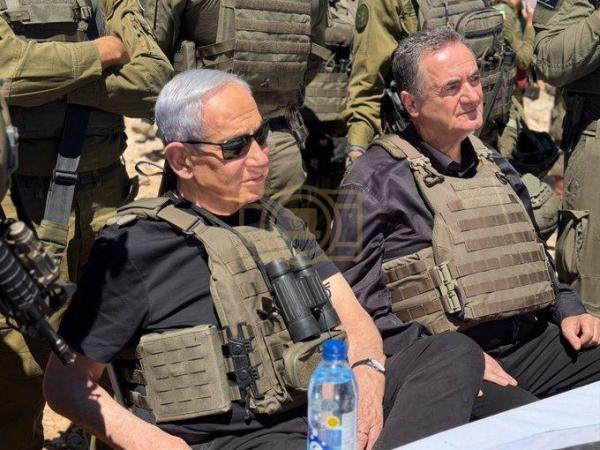
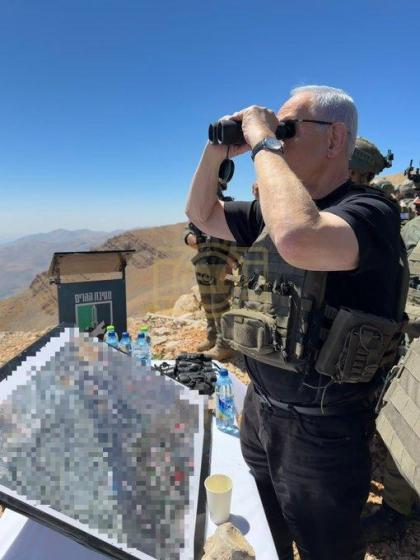
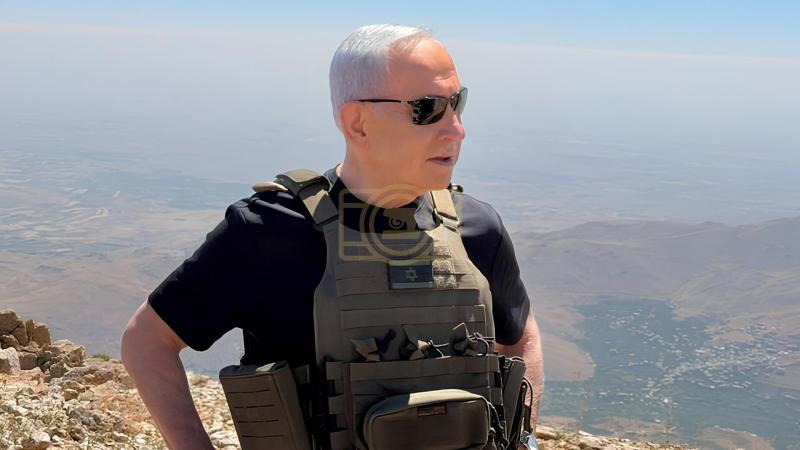
Israeli Prime Minister Benjamin Netanyahu traveled to the summit of Mount Hermon on the Syrian side of the border on Wednesday, delivering a defiant message aimed squarely at Iran just ahead of the Jewish New Year. He was joined by Defense Minister Israel Katz and IDF Deputy Chief of Staff Maj. Gen. Tamir Yadai, and the group received an operational briefing at an IDF outpost overlooking Syrian territory from Northern Command chief Maj. Gen. Rafi Milo and 210th Division Commander Brig. Gen. Yair Palai. Standing atop one of the most strategically significant vantage points in the region, Netanyahu described the moment vividly, noting that Damascus, Lebanon, and the Syrian Golan Heights were all visible from where he stood. He declared that Israel now holds what he called "absolute control" over the stretch of territory running from the Hermon summit to the Yarmouk River and westward to the Mediterranean Sea, a level of control he said had never been seen before.
Netanyahu framed the visit as both a security statement and a symbolic one, tying it directly to what Israeli officials have been calling the "War of Redemption." He vowed that Israel would not allow any hostile armed force to establish itself along its border, pointing to the current level of military presence in the area as one of the campaign's major achievements. From there, he pivoted directly to Iran, stating plainly that the central task ahead is defeating what he called the "terrorist regime" in Tehran. Netanyahu expressed confidence that Israel is very close to achieving that goal, adding that the broader network of Iran-aligned forces across the region, often referred to as the "axis of resistance," will ultimately collapse entirely.
The timing and language of the visit echo a series of similar high-profile appearances Israeli officials have made atop Mount Hermon since Israeli forces first seized the summit following the fall of the Assad regime. Defense Minister Katz made a comparable visit to the same peak in late August, using the opportunity to send pointed warnings to both Damascus and Ankara about Israel's intentions to remain in the area. These repeated visits appear designed to project a consistent message: that Israel's military foothold in Syrian territory is neither temporary nor negotiable in the current climate, and that the mountain itself serves as a symbolic perch from which to project power across multiple fronts at once. Netanyahu's remarks arrive amid Israeli intelligence assessments warning that Iran may be preparing a broad, multi-front assault involving Hezbollah, Hamas, the Houthis, and Iran-aligned militias in Iraq, a scenario officials have compared to the coordinated nature of the October 7 attack.
Closing his remarks on a more personal note, Netanyahu offered New Year's greetings to Israeli citizens and praised the soldiers stationed in the area for their continued service. The visit closed out with holiday wishes, but the substance of his comments made clear that Israel's leadership views the current moment as anything but a pause in hostilities. With Iran named directly as the next major target and regional tensions already running high across Lebanon, Syria, and the Gulf, Netanyahu's remarks from Mount Hermon read less like a holiday message and more like a declaration of ongoing intent heading into the new year.