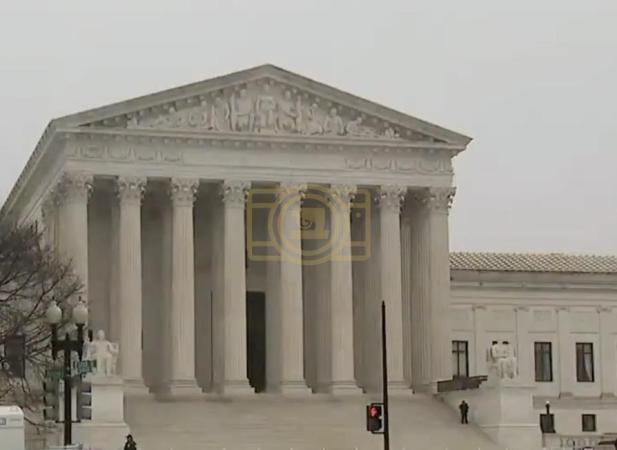
NEWS ALERT: Supreme Court Blocks Trump's Emergency Tariff Powers.

Gallery
Videos
The Supreme Court has delivered a significant setback to President Trump’s economic agenda by blocking his attempt to impose broad tariffs on most U.S. trading partners through emergency powers. In a 6-3 decision in Learning Resources, Inc. v. Trump, the Court ruled that the President exceeded his authority under the 1977 International Emergency Economic Powers Act (IEEPA), which was designed to target sanctions against foreign adversaries, not to justify routine import tariffs.
The ruling arose from challenges by U.S. businesses, who argued that the use of emergency powers to impose sweeping trade restrictions went beyond the intent of the law. The Court’s opinion emphasized that while the President retains significant authority over trade, IEEPA does not provide a blanket mechanism to unilaterally impose tariffs on global imports. Analysts note that other statutory avenues for tariffs remain available, but this decision firmly checks executive overreach in economic policymaking.
The outcome marks a pivotal moment in the balance of powers, reinforcing the judiciary’s role in reviewing the limits of presidential authority. By invalidating Trump’s attempt to bypass Congress on broad tariff measures, the Supreme Court preserves the principle that significant economic actions impacting international commerce require either legislative approval or adherence to narrowly defined statutory authority. The ruling has drawn attention from policymakers, economists, and international trade partners, highlighting the complex interplay between national security statutes and routine economic policy.