MARKET MIRACLE OR MIRAGE?: Oil Stays Under $100 Despite Gulf Disruption
Gallery
Videos
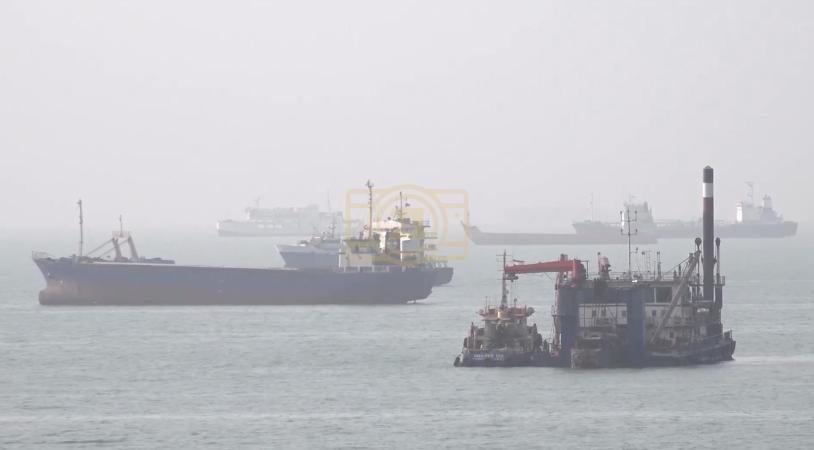
Brent crude has been on a tear this month, climbing steadily as fighting between the United States and Iran keeps disrupting one of the world's most important oil corridors, yet the benchmark still hasn't managed to break through the psychologically important $100-a-barrel mark. Prices have hovered in the high $90s range recently, with Brent trading around $97 to $98 a barrel even as tensions around the Strait of Hormuz show no signs of easing. That's a notable rally from where things stood just a couple months ago, but it's also a surprisingly restrained move given the scale of the disruption playing out in the Gulf. Exports from the region have reportedly been cut nearly in half, falling from around 18 million barrels per day down to roughly 11 million, a drop that under different circumstances might have sent prices soaring far higher.
So why hasn't the market panicked more than it has? Part of the answer lies in how resourceful traders and producers have become at working around the chaos. Alternative shipping routes, ship-to-ship transfers at sea, and a noticeable jump in output from non-OPEC producers like the United States, Canada, and Guyana have all helped soften the blow of reduced Gulf flows. At the same time, demand growth out of China, historically one of the biggest swing factors in global oil markets, has slowed considerably, driven by the country's rapid shift toward electric vehicles and unusually high stockpiles sitting in reserve. Put together, these forces have essentially built a cushion under the market, absorbing shocks that would otherwise be pushing prices into triple digits and beyond.
That cushion doesn't mean the underlying market is calm, though. Analysts point out that physical crude markets remain genuinely tight, with spot premiums reportedly running as high as $20 a barrel in some cases, a sign that buyers are still scrambling for immediate supply even if the futures market looks relatively composed. Diesel shortages have also emerged as a growing concern, hinting at strain further down the supply chain that headline benchmark prices don't always capture. It's a bit of a split-screen situation: the number everyone watches on financial news tickers looks manageable, while the on-the-ground reality for shippers, refiners, and industrial buyers tells a story of real scarcity and rising costs.
Whether this balance holds is very much an open question. Goldman Sachs has already warned that Brent could climb past $120 in 2027 if Gulf output remains significantly below prewar levels for an extended stretch, and the bank has flagged intensified attacks in the Strait of Hormuz and Red Sea as the most likely trigger for that scenario. For now, the combination of alternative supply routes, rising non-OPEC production, and softer Chinese demand is doing enough heavy lifting to keep prices from spiraling, but that equilibrium looks fragile. If the conflict escalates further, or if any of the offsetting factors currently propping up the market start to weaken, the $100 ceiling that's held so far could turn out to be far less solid than it appears today.