Nvidia CEO Says Trump's Energy Policy “Saved the AI Industry."
Gallery
Videos
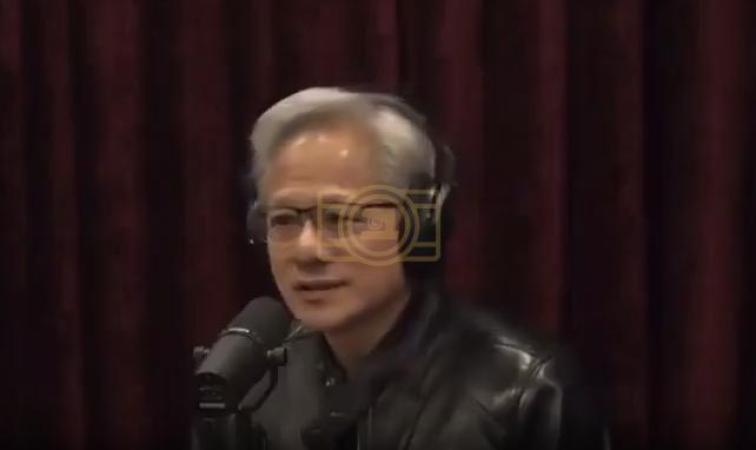
Nvidia CEO Jensen Huang delivered a striking acknowledgment of former President Donald Trump’s impact on the artificial intelligence revolution, stating that Trump’s aggressive pro-energy agenda effectively “saved the AI industry.” The comments surfaced in a recent clip from the Joe Rogan Experience, where Huang explained that large-scale AI development relies overwhelmingly on abundant, affordable power — something Trump’s “drill, baby, drill” policies provided in unprecedented measure.
According to Huang, the explosive growth of AI data centers, GPU manufacturing hubs, and advanced chip foundries would have been impossible without the massive energy output unlocked by Trump-era production incentives and deregulation. “None of that stuff will be possible without it,” he said, pointing to the multi-gigawatt facilities now serving as the backbone of the global AI economy.
Huang’s praise also comes shortly after his December 3, 2025 meeting with President Trump, where the two discussed U.S. strategy on AI semiconductor leadership and the tightening of chip export controls to China. The alignment between the world’s most valuable chipmaker and the Trump administration underscores a significant shift: Silicon Valley’s most influential corporate leaders are increasingly embracing Trump’s industrial and energy policies as essential to maintaining American dominance in AI.
The data supports the scale of that dominance. Nvidia reported a staggering 122% year-over-year revenue jump in Q3 2025, driven almost entirely by global demand for AI compute infrastructure. Virtually every major cloud provider, defense contractor, autonomous vehicle program, and robotics company depends on Nvidia’s chips — all of which require enormous power to manufacture and operate.
Huang’s remarks reflect a broader industry reality: AI is not merely a software revolution but an energy revolution. Without reliable, high-output power generation, neither the United States nor its competitors can train the frontier models, sustain the data centers, or build the semiconductor plants that define 21st-century national power.
By crediting Trump so directly, Huang highlights a political and economic convergence with major implications. As the AI race intensifies — particularly with China — the partnership between America’s leading chipmaker and a pro-growth, pro-energy administration suggests a future where tech leadership and national energy strategy are inseparable.
For Trump supporters and AI advocates alike, Huang’s comments mark a watershed moment: a public validation from the world’s most influential technologist that the policies driving America’s energy boom are the same policies driving its AI supremacy.