Trump Condemns Iranian Regime as “Just Evil."
Gallery
Videos
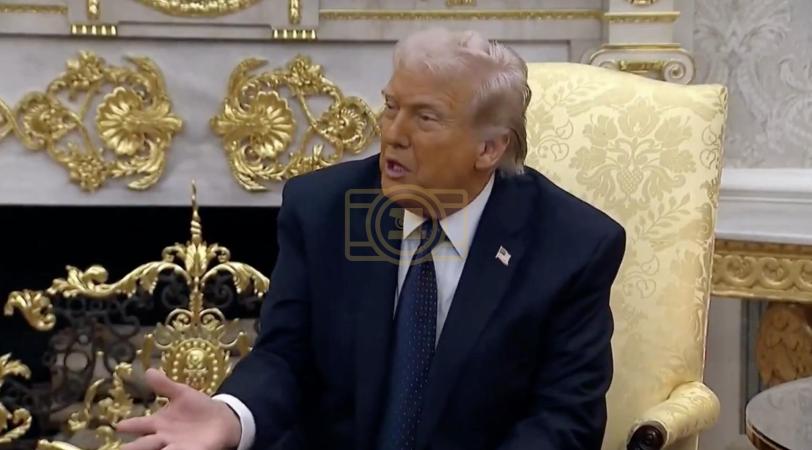
President Donald Trump delivered a forceful condemnation of Iran’s ruling regime this week, characterizing its governing ideology as “just evil” in remarks made amid intensifying U.S.-Israeli military operations. Speaking to reporters following Operation Epic Fury, Trump framed the confrontation not as a political dispute but as a moral reckoning with what he described as systemic brutality embedded within Tehran’s leadership structure.
“They’re just evil,” Trump said. “It’s not the politics, it’s their whole philosophy… it’s terrible.” The president pointed to Iran’s violent suppression of domestic unrest, referencing reports of security forces using machine guns against unarmed civilians during protest crackdowns. He cited casualty figures that, according to opposition sources, far exceed official state tallies, arguing that the scale of repression exposes the regime’s true character.
The remarks come in the aftermath of coordinated U.S. and Israeli strikes that eliminated Supreme Leader Ayatollah Ali Khamenei and targeted key infrastructure belonging to the Islamic Revolutionary Guard Corps (IRGC) and the Basij militia. These entities have long been accused of orchestrating internal crackdowns, surveilling dissidents, and enforcing ideological conformity through coercive force. Video footage circulating online has shown Basij units firing tracer rounds toward residential high-rises in Tehran during anti-regime demonstrations, scenes that reignited memories of January’s deadly unrest.
Trump also linked Iran’s governing ideology to its regional activities, including the arming and funding of proxy groups such as Hamas and other militant organizations operating across the Middle East. In comments made during a March 3, 2026, interview alongside Israeli Prime Minister Benjamin Netanyahu, Trump attributed tens of thousands of deaths in regional conflicts to Tehran’s network of proxies, arguing that Iran’s leadership exports violence as a core strategic doctrine.
The escalation follows a series of military engagements beginning March 1, 2026, during which U.S. and Israeli forces expanded air operations against Iranian command nodes, missile infrastructure, and security compounds. The death of Khamenei marked a historic turning point, prompting Iranian counterattacks on U.S. installations while simultaneously triggering rare coordination among Western and regional allies. Reports of allied forces intercepting Iranian aircraft and missiles have underscored what officials describe as growing international alignment against Tehran’s actions.
Inside Iran, uncertainty looms over succession. Hardline figures, including Khamenei’s son, are widely speculated as potential successors, raising concerns among reform advocates and exiled opposition groups that ideological rigidity could intensify rather than moderate. At the same time, celebrations among segments of the Iranian diaspora reflect a belief that sustained external pressure may embolden internal dissent.
When asked why there appears to be increasing global unity against Iran, Trump reiterated that the issue transcends conventional geopolitics. “It’s not the politics,” he said. “It’s their whole philosophy.” The president framed the unfolding events as a confrontation with an entrenched system that, in his view, relies on violence at home and destabilization abroad to survive.
As tensions remain elevated and retaliatory actions continue, the strategic trajectory of the conflict remains uncertain. What is clear is that the language from Washington has hardened considerably, pairing military escalation with moral denunciation. Whether that combination accelerates regime collapse, compels structural reform, or deepens confrontation will shape the next phase of an already volatile regional crisis.